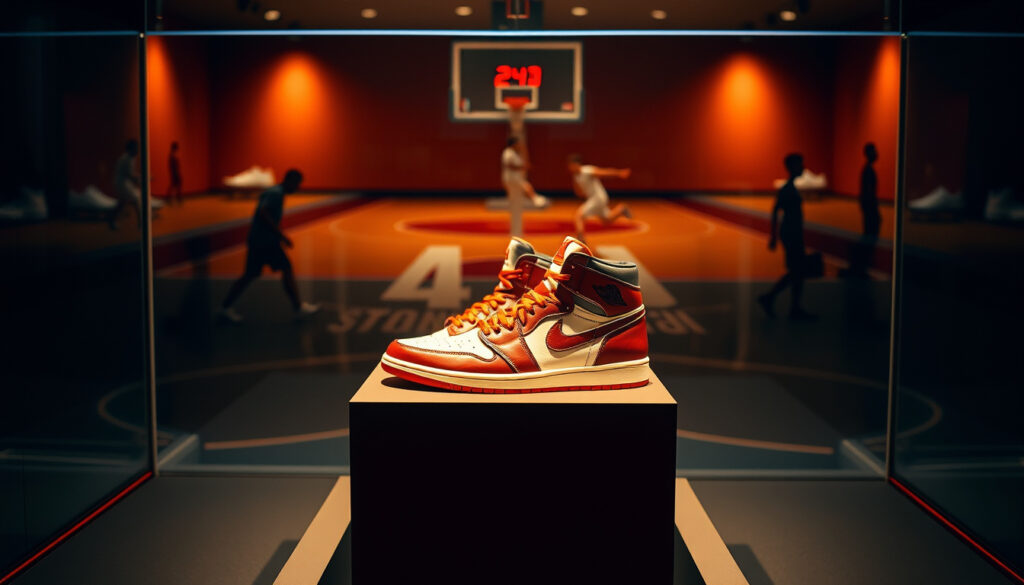
Air Jordans: Why They’re Expensive, Most Popular Models & More
Few things in fashion have sparked as much obsession as a pair of Air Jordans. Since the first release in 1985, these sneakers have transcended basketball to become a cultural icon and a multi-billion-dollar market.
First release year: 1985 ·
Parent company: Nike, Inc. ·
Most popular model: Air Jordan 1 ·
Estimated annual revenue (Jordan Brand): over $5 billion
Quick snapshot
- Nike owns and produces Air Jordans (Wikipedia (encyclopedic source))
- First Air Jordan released in 1985 (Wikipedia (encyclopedic source))
- Air Jordan 1 is the most popular model (Foot Locker (retailer and sneaker authority))
- Exact production numbers for limited releases are not publicly disclosed
- Future collaboration details are often speculative until official announcements
- 1985: First Air Jordan released (Wikipedia (encyclopedic source))
- 1997: Jordan Brand becomes a separate division (Basketball Network (sports media outlet))
- Jordan Brand continues to release new models and collaborations (JD Sports Blog (sneaker retailer))
- Retro releases and limited drops expected to sustain collector interest (JD Sports Blog (sneaker retailer))
Six key facts distil the Air Jordan story into a single snapshot:
| Label | Value |
|---|---|
| Parent company | Nike, Inc. |
| Year introduced | 1985 |
| Founding athlete | Michael Jordan |
| Best-selling model | Air Jordan 1 |
| Estimated annual revenue | Over $5 billion |
| Most faked sneaker | Air Jordan 1 |
Why are Air Jordans so expensive?
Limited production runs and scarcity
Air Jordans are priced high because Nike deliberately limits supply. Many colorways are produced in small batches, creating artificial scarcity. According to RunRepeat (sneaker statistics platform), Jordan shoes hold about 28% of the secondary shoe market share, driven by hype around limited drops. The Reuters (global news agency) reported that the average markup on new releases of the Jordan Retro High fell from 61% in 2020 to 4% in 2023, indicating that scarcity — not quality — is the main price driver.
Celebrity endorsement and brand premium
Michael Jordan‘s signature alone adds a premium. Nike expected to make $3 million from Air Jordan in its first three years, but the line generated $126 million in one year, according to Wikipedia (encyclopedic source). The retail price for standard models ranges from $100 to over $200, with collaborations and retro releases often commanding higher prices.
Resale market dynamics
The resale market inflates prices further. RunRepeat reports that combined resale revenue from Nike and Air Jordan reached $7.1 billion in 2020. However, the market is cooling: some 2023 colorways such as True Blue, Skyline, and White Cement sold at a loss or near retail, per Reuters.
Is Nike still making Air Jordans?
Current production status
Yes, Nike continues to produce Air Jordans under the Jordan Brand. New models and retro releases are released regularly. According to JD Sports Blog (sneaker retailer), Air Jordans have had 37 iterations, plus returns of iconic original designs. The Air Jordan 13, launched in 1997, was the first model without the word Nike on the shoe, marking the shift to the Jordan Brand era, as noted by Basketball Network (sports media outlet).
Jordan Brand as a subsidiary of Nike
Jordan Brand operates as a separate division within Nike, with its own creative control. For fiscal year 2024, Jordan Brand produced $7 billion in revenue and represented 13% of Nike’s total revenue, according to Basketball Network. This autonomy allows the brand to develop its own marketing and product lines while leveraging Nike’s manufacturing and distribution.
What are the most popular Air Jordans?
Air Jordan 1
The Air Jordan 1, released on April 1, 1985, is the most iconic and best-selling model. Foot Locker (retailer and sneaker authority) describes it as the origin point of modern sneaker culture. The original retail price of $64.99 seems laughable today, but the shoe’s cultural impact is priceless. It is also the most faked Jordan model, according to RunRepeat.
Air Jordan 4
The Air Jordan 4 (1989) is another top seller, beloved for its distinctive mesh panels and visible Air unit. It remains a favourite among collectors and is frequently re-released.
Air Jordan 11
The Air Jordan 11 (1995) is celebrated for its patent leather and sleek design. It was Michael Jordan’s favourite shoe on court and continues to be a premium retro release.
Other notable models
Models like the Air Jordan 3 (introducing the Jumpman logo) and Air Jordan 13 also hold significant cultural weight. Popularity varies by colorway and release year, but the AJ1 consistently leads.
Three popular models, one pattern: each serves a different purpose — performance, style, or investment.
| Model | Release Year | Designer | Original Retail Price |
|---|---|---|---|
| Air Jordan 1 | 1985 | Peter Moore | $64.99 |
| Air Jordan 4 | 1989 | Tinker Hatfield | $100 |
| Air Jordan 11 | 1995 | Tinker Hatfield | $125 |
The implication: the Air Jordan 1 offers the best mix of heritage and versatility, while the AJ4 and AJ11 are stronger for collectors seeking growth potential.
Are Nike and Jordans the same?
Relationship between Nike and Jordan Brand
Jordan Brand is a subsidiary of Nike, Inc. Nike produces all Air Jordan shoes, but Jordan Brand operates with its own logo and marketing. The relationship is similar to how Toyota owns Lexus — separate branding, shared engineering.
Key differences in branding and product lines
The most visible difference is the logo: Nike uses the Swoosh, while Jordan Brand uses the Jumpman. Products are also marketed differently. The Air Jordan 13 was the first model to appear without the Nike Swoosh, symbolising the brand’s independence. According to Basketball Network, Jordan Brand operates autonomously with creative control despite being owned by Nike.
Which is the best Air Jordan to buy?
Best for basketball performance
For on-court performance, the Foot Locker (retailer) recommends modern models like the Air Jordan 34, which features lightweight materials and responsive cushioning. The Air Jordan 1, while iconic, offers less modern support.
Best for casual wear and style
The Air Jordan 1 is the top choice for everyday style. Its timeless silhouette pairs with almost any outfit. The Air Jordan 4 and Air Jordan 11 also score high for streetwear appeal.
Best for investment and resale
Limited edition colorways of the Air Jordan 1, 4, and 11 have historically appreciated in value. The most expensive Air Jordan ever sold at auction is a pair of game-worn Air Jordan 1s that fetched $1.47 million in 2021. However, as Reuters notes, the resale market has cooled, so investment is not guaranteed.
Three popular models, one pattern: each serves a different purpose — performance, style, or investment.
| Model | Release Year | Designer | Original Retail Price |
|---|---|---|---|
| Air Jordan 1 | 1985 | Peter Moore | $64.99 |
| Air Jordan 4 | 1989 | Tinker Hatfield | $100 |
| Air Jordan 11 | 1995 | Tinker Hatfield | $125 |
The implication: the Air Jordan 1 offers the best mix of heritage and versatility, while the AJ4 and AJ11 are stronger for collectors seeking growth potential.
Upsides
- Iconic design that transcends fashion trends
- Strong cultural and historical significance
- High resale value for limited editions
- Good basketball performance in modern models
Downsides
- High retail and resale prices
- Limited availability of popular colorways
- Widespread counterfeiting, especially the Air Jordan 1
- Resale market volatility and hype-driven pricing
Timeline: Key milestones in Air Jordan history
- 1985 – First Air Jordan shoe released, designed by Peter Moore (Wikipedia).
- 1988 – Air Jordan 3 introduces the Jumpman logo (Foot Locker).
- 1997 – Jordan Brand becomes a separate division within Nike (Basketball Network).
- 2000s – Retro releases fuel sneaker collecting culture (JD Sports Blog (sneaker retailer)).
- 2020s – Jordan Brand continues to release new models and collaborations (JD Sports Blog (sneaker retailer)).
The pattern: each decade has shifted the brand’s identity — from performance shoe to cultural artefact to financial asset.
Clarity: What we know and what we don’t
What’s unclear
- Exact production numbers for limited releases are not publicly disclosed.
- Future collaboration details are often speculative until official announcements.
- Exact sales figures for individual retro releases (e.g., Nike reportedly sold 4 million pairs of the AJ1, but this is an estimate).
Key perspectives from the industry
“The average markup on new releases of the Jordan Retro High fell from 61% in 2020 to 4% in 2023, as the sneaker resale market cools.”
Reuters (global news agency)
“Nike used the banned-shoe narrative in marketing and reportedly sold $70 million worth of Air Jordans within two months of release.”
For collectors and casual buyers alike, the choice is clear: either buy what you love at retail and accept the market’s volatility, or chase limited drops and hope for appreciation. In either case, the Air Jordan story is far from over. For the sneaker enthusiast in Ireland, the decision is simple: invest in a pair of Air Jordan 1s for style, or grab a modern model for performance — but always verify authenticity first.
footy.com, reddit.com, youtube.com, about.nike.com, pudding.cool
For sneaker enthusiasts drawn to the understated elegance of the Jordan 4 Black Cat, understanding the pricing and availability context of the broader Air Jordan lineup is essential.
Frequently asked questions
How do I verify if my Air Jordans are authentic?
Check the box label, stitching quality, and the barcode on the size tag. Official Nike retail stores and platforms like StockX offer authentication services.
What is the difference between Air Jordan 1 High and Low?
The High features a taller collar that covers the ankle, while the Low has a shorter cut. The High is more iconic and generally more collectible.
Are Air Jordans good for basketball?
Modern models like the Air Jordan 34 are designed for performance, but classic models like the Air Jordan 1 lack modern cushioning and support. They are better suited for casual wear.
How should I clean my Air Jordans?
Use a soft brush with mild soap and water for leather, and a suede eraser for nubuck. Avoid machine washing.
What is the most expensive Air Jordan ever sold?
A pair of game-worn Air Jordan 1s sold for $1.47 million at auction in 2021.
Do Air Jordans run true to size?
Most models fit true to size, but some retro releases may run slightly narrow. It’s recommended to try them on or consult size charts.
Where can I buy authentic Air Jordans online?
Official Nike.com, Foot Locker, JD Sports, and reputable resale platforms like StockX and GOAT.
More related posts
 Outer Banks Season 5: Release Date, Cast, and Final Season News
 Bench Seat History, Disappearance & DIY Build Guide
 Fernando Mendoza: Raiders QB stats, age, and future
 Woolworths Sandy Bay: Hours, Location and Online Shopping
 Slay the Spire: Guide to Gameplay, Difficulty & Slay 2
 Audrey Hepburn: Death, Love, and Life Beyond the Screen
 Sadie Sink: Age, Dating, Style, and Spider-Man Role (2024)
 Jemima Goldsmith: Biography, Net Worth, and New Engagement
