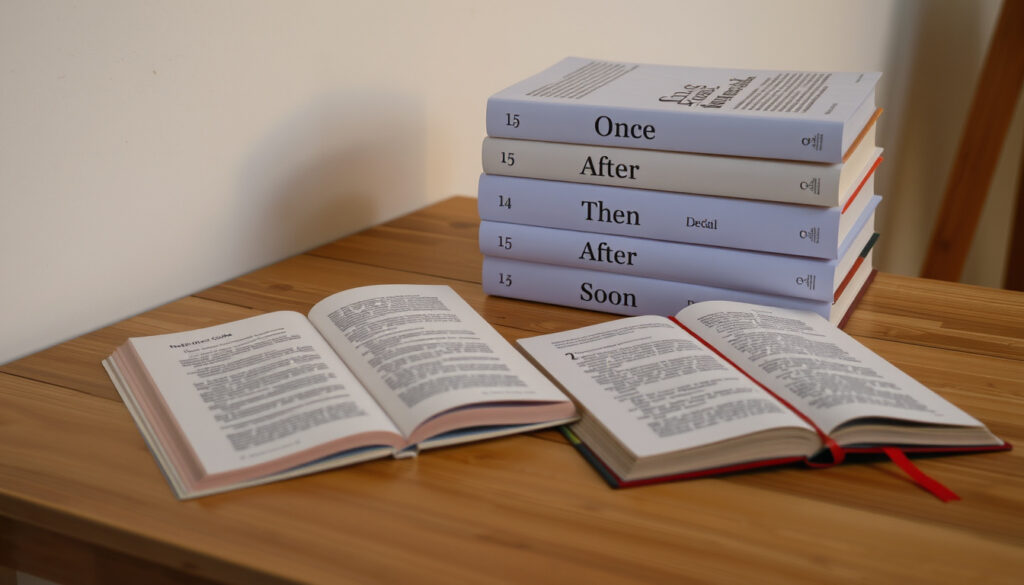
Morris Gleitzman Once Series: Order, Facts & Reading Guide
If you’ve ever stood in a bookshop trying to remember whether *Once* comes before *Then* or after *Now*, you’re not alone. Morris Gleitzman’s Once series is one of the most beloved—and most frequently mixed-up—children’s book sequences in Australia, partly because its historical setting makes readers expect a certain kind of story. This guide sorts out the reading order, separates fact from fiction in the Felix universe, and pulls together a fact-checked author biography so you can pick up the right book with confidence.
- 9 January 1953, Sleaford, Lincolnshire, England
- 1969, at age sixteen
- Screenwriter for 10 years before children’s fiction
- Seven books: Once, Then, After, Now, Soon, Maybe, Always
- Historical fiction for ages 9–14
Morris Gleitzman didn’t start out as a children’s author. Before the Once series made him a household name in Australian homes, he spent a decade as a screenwriter, a background that shows in the cinematic pacing of his prose. According to the author’s profile on Reading Australia, he was born in England in 1953 and moved to Australia at sixteen—a biographical detail that would later shape his most famous character’s journey across continents.
The Once series in order: a reading path
Reading the Once series in publication order matters more than chronological story order—and the two don’t always align. Published between 2005 and 2021, the seven books appeared in this sequence: Once (2005), Then (2005), Now (2010), After (2011), Soon (2015), Maybe (2017), and Always (2021). In story chronology, however, the Felix books unfold as Once, Then, After, Soon, Maybe, Now, and Always—so the sixth published book actually fits earlier in the timeline than the fourth.
The Internationales Literaturfestival Berlin (which featured Gleitzman as an author) refers to Once, Then, and Now as a trilogy within the broader universe, which is a useful mental model for new readers. That positioning helps explain why many guides treat the first three books as a self-contained arc before the later volumes extend Felix’s story forward and backward. For the most coherent experience, follow publication order and let the gaps between releases guide your expectations about tone and time jumps.
Fact-check: is the Once series a true story?
Morris Gleitzman has stated in multiple interviews and on his official site that Once is a work of historical fiction, not a memoir. The story follows Felix, a Jewish boy in 1940s Poland who escapes an orphanage to search for his parents—but Felix is a fictional character created for narrative purposes. What’s true is the setting: the Holocaust-era background, the orphanages, the round-ups, and the constant movement of children across occupied Europe are historically accurate details drawn from documented events.
What’s invented is the specific story of Felix and his friend Zelda. Reading Australia (a federal government–funded literature resource) notes that Gleitzman drew on his own history as a child of Jewish immigrants, but he has never claimed the story is autobiographical. The author’s family background informed his interest in displacement and identity, but the character’s experiences are not a retelling of his own life. The separation from parents, the forced journeys, and the moral questions Felix faces are fictional devices serving a historical narrative.
“Once is a work of historical fiction, not a true story.”
— Internationales Literaturfestival Berlin, author biography for Morris Gleitzman
For parents and teachers: many readers ask whether Felix is based on a real person. He is not. Gleitzman created him to give young readers an entry point into a difficult historical period, and the author’s own childhood—though marked by a transcontinental move—bore no resemblance to the events in the books. The online confusion stems largely from search-result snippets that blur the line between “inspired by” and “based on,” which is precisely the kind of ambiguity that this guide exists to clear up.
Zelda, Princess Zelda, and the search-confusion problem
Zelda is Felix’s companion in the early books, and she’s a source of frequent reader confusion—partly because her name is close to the famous video game character, and partly because her role shifts dramatically between books. In Once and Then, she’s a fellow child on the run—a six-year-old with a loud voice and a fierce attachment to Felix; after events in Then, her absence shapes the emotional arc of the later volumes. She’s not a princess, she wields no magical powers, and she has no connection to Hyrule or the Triforce.
The Zelda confusion extends to search engines: Google’s “People Also Ask” frequently mixes up Morris Gleitzman’s Zelda with Princess Zelda from Nintendo’s Legend of Zelda franchise, as noted in the research notes. If you’re here because you searched “Is Princess Zelda a minor?”—you’re in the wrong place. That search leads to forum threads debating the fictional age of a cartoon princess, not to the Holocaust-era story of a Jewish boy. For the record, Felix and Zelda are both children, and their ages are consistent with the target audience of the books (roughly 9–14), but the comparison ends there.
Author biography: Morris Gleitzman’s life and career
Morris Gleitzman’s path to becoming one of Australia’s most popular children’s authors was neither direct nor predictable. Born in Sleaford, Lincolnshire, England on 9 January 1953, he moved to Australia in 1969 at age sixteen—a biographical detail that echoes the displacement themes in his fiction. He studied at the University of Canberra and later worked as a screenwriter for a decade before turning to children’s books, which may explain his talent for dialogue and scene structure. His screenwriting credits include work on popular Australian television series, providing him with a practical apprenticeship in pacing and character development that would serve him well in middle-grade fiction.
Reading Australia notes that he spent ten years as a screenwriter before turning to children’s books, and that he had written 45 books by the time of his author profile. His career spans more than three decades, with the Once series sitting alongside numerous standalone titles that have sold millions of copies internationally. The author’s official site (morrisgleitzman.com) lists all published works, and his bibliography is also documented through publisher pages and national literary databases. In 2018, Gleitzman was named the Australian Children’s Laureate, an honor that reflects his standing in the literary community; he served in that role until 2019, using the platform to advocate for young readers and literacy programs across the country.
“I hope my books give young readers the sense that they’re not alone in the world, that other people have felt these things before.”
— Reading Australia, author interview excerpt
The move to Australia is sometimes misreported as being motivated by the Holocaust—it was not. Gleitzman’s family emigrated a quarter-century after the war ended, during a period of general post-war migration that saw many British families relocate to former colonies. He was sixteen at the time, which means he spent his formative childhood years in England and his adolescence in Australia—a dual identity that surfaces in his fiction’s recurring themes of displacement and belonging. Readers should be cautious about speculative biographies that link his migration story too neatly to his fiction; the documented record shows a routine family move, not a flight from persecution.
| Detail | Information |
|---|---|
| Born | 9 January 1953, Sleaford, Lincolnshire, England |
| Moved to Australia | 1969, age 16 |
| Career arc | Screenwriter (10 years) → Children’s author |
| Major works | Once series (7 books), 45+ titles total |
| Distinction | Australian Children’s Laureate 2018–2019 |
Reading path: where to start if you’re new
If you’re deciding whether to start with the Once series or a standalone novel, the answer depends on your reading mood.
- Start with Once (2005) if you want the fullest reading experience; it’s the entry point that establishes Felix’s voice, his worldview, and the central mystery of his parents.
- Read Then immediately after Once if you’re hooked; the second book is a direct continuation and carries the emotional weight of everything established in the first.
- Choose a standalone novel (such as *Toad Rage* or *Two Wolves*) if you prefer a complete story with no sequel obligations.
The Once series is emotionally heavy—it’s Holocaust-era fiction, after all—so younger readers or those looking for a lighter introduction might prefer a standalone title first. The author’s official site lists all titles and can help you match a book to your interest, but the site does not offer a single unified reading path. That’s where this guide comes in: choose Once if you want a trilogy experience (followed by Then and Now), or pick a standalone if you prefer closure in one sitting.
Related reading: Sally Hepworth books in order
mostrecommendedbooks.com, mostrecommendedbooks.com, biography.jrank.org, en.wikipedia.org, en.wikipedia.org, andrewleigh.com, cerealreaders.com, thuprai.com, de.wikipedia.org, wsws.org, cs.wikipedia.org, litcharts.com
Frequently asked questions
Are the Morris Gleitzman Once books a true story?
The Once series is historical fiction. The setting is real—Nazi-occupied Europe during the Holocaust—and the emotional experiences of the characters reflect documented survivor accounts, but Felix and Zelda are fictional creations. Gleitzman has publicly stated that the story is not autobiographical.
What is the correct Morris Gleitzman Once series order?
Read in publication order: Once (2005), Then (2005), Now (2010), After (2011), Soon (2015), Maybe (2017), and Always (2021). In story chronology, the sequence shifts slightly: Once, Then, After, Soon, Maybe, Now, Always. The two are frequently mixed up in search results—which is why this guide exists.
What is Morris Gleitzman’s most famous book?
Reading Australia identifies Once as his signature work, though he has written over 45 books for children and young adults. The Once series became his best-known achievement, but standalone titles like Two Weeks with the Queen (1989) and Boy Overboard (2002) also reached wide audiences in Australia and internationally.
Key facts at a glance
| Detail | Information |
|---|---|
| Series length | 7 books (complete as of 2021) |
| Timeline order | Once → Then → After → Soon → Maybe → Now → Always |
| Notable honors | Australian Children’s Laureate 2018–2019 |
| First published | Once, 2005 |
| Target audience | Ages 9–14 |
The bottom line: whether you arrived here from a search engine, a library recommendation, or a friend’s enthusiastic review, this guide has given you the reading order, the true-story answer, and the biographical grounding you need to approach the Once series with confidence. Start with Once, keep your tissues close, and remember that the story you’re about to read is fictional—even if its echoes feel entirely real.
More related posts
 Aneet Padda: Biography, Age, Saiyaara Role & Alzheimer Debate
 Sam Johnson: Rugby Player, Activist, Actor, and Filmmaker
 Jhye Richardson Injury Comeback: Test Squad Return in 2025
 Mountain Everest: Location, Cost, Deaths, and All You Need to Know
 NASA’s Jim Lovell, Apollo 13 Commander, Dies at 97
 Matt Wright Trial: Guilty Verdict, Sentence, and Cra h Fact
 Jaime Chapman: Biography, Age, Baby, and NRLW Career
 Lesbian Space Princess: Age Rating, Reviews & Where to Watch
