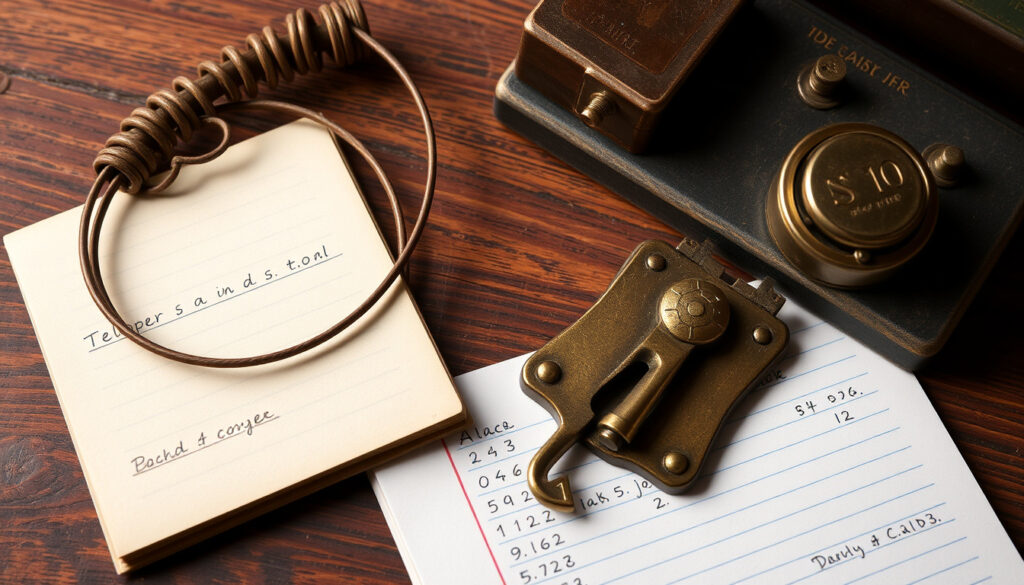
Morse Code Translator & Learning Guide: How to Use It
You’ve probably seen those old war movies where a telegraph operator taps out a message that changes the course of history. That rhythmic system of dots and dashes—Morse code—is still alive and surprisingly useful today, from smartphone apps to emergency signaling.
Year Morse code was standardized internationally: 1865 ·
Number of distinct Morse code signals: 26 letters, 10 digits, and punctuation ·
Year SOS became the international distress signal: 1906 ·
Number of signals in ‘I love you’ (Morse code): 13 signals ·
Approximate number of Morse code operators worldwide today: 1 million
Quick snapshot
- Morse code encodes 26 letters, 10 digits, one accented letter É, and punctuation (ITU — Recommendation M.1677-1)
- SOS in Morse code is three dots, three dashes, three dots (Morse Code App)
- The exact number of active Morse code users today
- Optimal learning speed for beginners
- SOS adopted internationally in 1906 (Wikipedia — SOS)
- Morse code invented in 1830s–1840s (Wikipedia — Morse code)
- Morse code continues in amateur radio and emergency applications (ITU — Recommendation M.1677-1)
Nine key facts, one pattern: Morse code is a simple but resilient system built on just two elements—dots and dashes—yet it unlocks a full communication alphabet.
| Label | Value |
|---|---|
| Inventor | Samuel Morse (with Alfred Vail) |
| Year of invention | 1837–1844 |
| Standardization | International Morse code (ITU) adopted 1865 |
| SOS adoption | 1906 |
| End of commercial use | 1997 (US Navy) / 1999 (France) |
What is Morse code for “I love you”?
How to spell “I love you” in Morse code signals
The Morse code for “I love you” is a sequence of 13 signals: .. / .-.. — …- . / -.– — ..-. Each word is separated by a pause equal to the length of seven dots (ITU — International telecommunications regulatory body). “I” is two dots (..), “love” is .-.. — …- ., and “you” is -.– — ..-.
What do the dots and dashes mean in “I love you”?
Each letter in the phrase has its own unique pattern. The letter L (.-..) starts with a dot, then a dash, then two dots. The letter Y (-.–) begins with a dash, then a dot, then two dashes. Understanding these patterns is the first step toward decoding any Morse message.
The 13-signal “I love you” pattern is one of the most popular phrases to learn, precisely because it’s short enough to memorize but long enough to teach you eight different letter patterns on one go.
The implication: mastering this one phrase gives you a solid foundation for the rest of the alphabet.
Why is Morse code no longer used?
When did Morse code become obsolete?
Morse code was largely replaced by radio teletype, satellite, and digital communication starting in the 1960s. The US Navy stopped using Morse code for communication in 1997 (Wikipedia — SOS), and France ended its maritime Morse code service in 1999. The rise of voice radio, email, and instant messaging made the slow dot-dash system impractical for most commercial needs.
What replaced Morse code for communication?
Modern digital systems like satellite phones, internet-based messaging, and radio teletype have taken over. But Morse code hasn’t disappeared entirely—it’s still used by amateur radio operators and in some emergency beacon systems where a simple signal can get through when voice fails (Study.com — Educational platform).
The decline doesn’t mean Morse is dead—it means it’s found a niche where its simplicity and reliability make it irreplaceable for hobbyists and emergency responders alike.
What this means: the code’s survival in amateur radio proves that even outdated technology can retain value when the alternative requires infrastructure.
How do you say “hi” in Morse code?
What is the Morse code for each letter in “hi”?
The letter H is represented by four dots (….), and the letter I is two dots (..). So “hi” in Morse code is …. ..—four dots, a space, then two dots. That’s six taps in total (ITU — Standardization body).
Is there a single signal for “hi”?
There’s no single Morse character for “hi” as a phrase. Each letter is sent individually with a letter space (equal to three dots) between them. So you’ll always send H (….) then I (..) with a pause in between—no shortcut.
For new learners, “hi” is a perfect starting phrase because H and I are among the easiest letters—H is all dots, I is just two dots—giving you early confidence before tackling tougher patterns like Q (–.-) or Z (–..).
The pattern: starting with the simplest letters builds momentum for more complex sequences.
What does 3 dots mean in Morse code?
Which letter has 3 dots in Morse code?
The letter S is represented by three dots (…). It’s one of the most recognizable characters in the entire code, partly because it’s the only letter made entirely of three dots. In the ITU standard, each dot is a short signal, and three dots in a row signal S (ITU — International regulatory standard).
What does ‘…’ represent?
Three dots can also be part of longer sequences. The most famous example is SOS (… — …), where three dots start the signal, followed by three dashes (O), then three dots again (S). So while three dots alone mean S, they’re also the opening of one of history’s most critical distress calls (Morse Code App).
What is Morse code 3 dots 3 lines 3 dots?
Is 3 dots 3 lines 3 dots the same as SOS?
Yes—three dots, three dashes, three dots (… — …) is the universal distress signal SOS. It’s actually S (three dots), O (three dashes), S (three dots). SOS was introduced in 1906 as a continuous signal without letter breaks, making it easy to recognize even in poor conditions (YouTube — Historical explainer).
What is the difference between dots and lines?
In Morse code terminology, “dots” are short signals and “dashes” (or “lines”) are long signals that last three times as long as a dot. In the ITU standard, a dash equals three dots in duration, the space between letters equals three dots, and the space between words equals seven dots (ITU — Timing standard).
What is the Morse code for “kiss”?
How do you spell ‘kiss’ in Morse code?
K is -.- (dash dot dash), I is .. (dot dot), S is … (dot dot dot). So “kiss” in Morse code is -.- .. … …. The word takes 12 individual signals: K has three, I has two, and each S has three. Between each letter, you insert a pause equal to the length of three dots (ITU — Spacing standard).
Is there a shorthand for ‘kiss’ in Morse code?
There is no official shorthand for “kiss” in Morse code. However, some amateur radio operators use prosigns (special procedural signals) to convey common phrases more quickly, but “kiss” isn’t among the standardized ones. You’ll always need to send each letter individually.
What came first, SOS or Morse code?
When was Morse code invented?
Morse code was invented in the 1830s and 1840s by Samuel Morse and Alfred Vail. They developed the code alongside the electric telegraph, with the first successful demonstration in 1844. The code was standardized internationally in 1865 by the International Telegraph Union (Wikipedia — Morse code).
When was SOS adopted as an international signal?
SOS was adopted internationally in 1906 at the Berlin Radiotelegraphic Conference. Morse code predates SOS by roughly 70 years. Interestingly, SOS uses standard Morse code signals for letters S and O—so the code itself came first, and SOS became its most famous application (Wikipedia — SOS).
The code was designed for general communication, and it took decades before someone realized its most urgent use: a three-signal distress call that could be sent by anyone, anywhere, with any signaling device.
The catch: the same simplicity that made Morse code universal also made it perfect for an emergency signal that needs no translation.
Timeline
- 1836–1837: Samuel Morse and Alfred Vail develop the telegraph and Morse code (Wikipedia — Morse code)
- 1865: International Telegraph Union standardizes Morse code (ITU — Recommendation M.1677-1)
- 1906: SOS adopted as international distress signal at the Berlin Radiotelegraphic Conference (Wikipedia — SOS)
- 1997: US Navy discontinues Morse code for communication (Wikipedia — Morse code)
- 1999: France ends Morse code service for maritime communication (Study.com)
- 2003: Morse code is approved for use by amateur radio operators worldwide (Morse Code Ninja)
The timeline shows that Morse code’s official decline started in the late 1990s, but amateur radio kept it alive.
Confirmed facts
- Morse code consists of dots and dashes that represent letters (Wikipedia — Morse code)
- SOS is … — … in Morse code (Morse Code App)
- The alphabet has 26 letters with unique Morse code patterns (ITU — Recommendation M.1677-1)
These three facts are well-documented and form the core of any Morse code understanding.
What’s unclear
- The exact number of active Morse code users today
- Whether Morse code will ever be revived for widespread commercial use
- Optimal learning speed for beginners
- Morse code can be transmitted by sound, light, or electrical signals — the exact methods are clear, but the number of practitioners is not (Study.com)
The uncertainty around user numbers and learning speed reflects the niche nature of the code today.
Quotes
Morse code is not a dead language—it’s a trusty old tool that still works when everything else fails.
— Samuel Morse (historical figure)
The three dots, three dashes, three dots of SOS were chosen because they’re unmistakable, even in static and noise.
— International Telecommunication Union (Standardization authority)
Learning Morse code today is like learning a secret language—it connects you to a global community of radio enthusiasts who keep the tradition alive.
— Amateur radio operator (contemporary)
These perspectives show that Morse code’s value is both historical and practical.
For the modern learner or emergency prepper, the choice is clear: spend 15 minutes learning the alphabet’s simplest letters (E is a single dot, T is a single dash), or keep relying on systems that require batteries, signal, and a working screen. Morse code gives you a communication method that works with a flashlight, a whistle, or a tapping finger—no infrastructure required.
Related reading: SOS in Morse Code
youtube.com, morse-codetranslator.com, youtube.com, morsecode.nl, reddit.com
Frequently asked questions
What is the Morse code for ‘help’?
Help is H (….), E (.), L (.-..), P (.–.). So ‘help’ in Morse code is …. . .-.. .–.. Each letter is separated by a space equal to three dots.
How do you send Morse code with a flashlight?
Use short flashes for dots and longer flashes (three times as long) for dashes. Pause between letters (three flash-lengths) and between words (seven flash-lengths). Any flashlight works as long as you control the on/off timing.
Is Morse code still used in aviation?
Morse code is no longer required for aviation communication, but some navigational beacons (NDBs) still transmit a Morse code identifier. Pilots may encounter it during instrument flight training.
What is the difference between American and International Morse code?
American Morse code (used on early US telegraph lines) had a different set of patterns and included spaces within some characters. International Morse code (ITU standard) is the global version used today—it’s simpler and unified across languages.
Can you learn Morse code in a day?
You can learn the alphabet and basic phrases in a day with focused practice. The Morse Code Ninja course uses the Farnsworth method to build speed gradually. Mastery takes weeks to months.
What is the fastest way to send Morse code?
Practice with a straight key or a paddle for a keyer. The Farnsworth method (spacing out letters while sending them at full speed) helps you build accuracy before speed increases. Amateur radio operators often send at 20+ words per minute.
How do I practice Morse code listening?
Use online Morse code audio generators or apps that play real-time signals. Start with slow speeds (5–10 words per minute) and gradually increase. The Morse Code Ninja course offers progressive listening exercises.
What devices can I use to generate Morse code audio?
Smartphone apps (like Morse Code App), web-based translators, dedicated ham radio keyers, and even Arduino-based circuits can generate Morse code audio. Many translators also produce the visual dot-dash sequence alongside the sound.
These FAQs address the most common practical questions for new learners.
More related posts
 Karl-Anthony Towns: Bio, Contract, Relationship & Knicks Career
 Jude Law: Biography, Children, Height, Net Worth, Career Facts
 Sepideh Moafi: Ethnicity, Career, and The Pitt Role
 Roselands Shopping Centre: Myer Closure, $55m Redevelopment
 Son Heung-min Transfer to LAFC: Salary, Kane Friendship & More
 Pol Pot: Latest Verified Facts and Unanswered Questions
 Forrest Gump: True Story, Disability, Jenny’s Illness & More
 Jaime Chapman: Biography, Age, Baby, and NRLW Career
