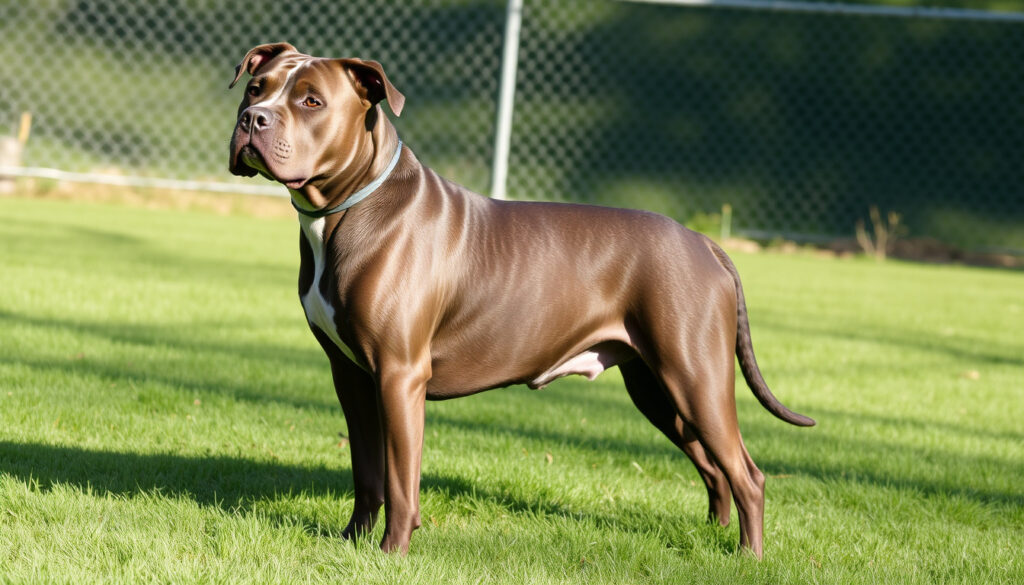
Pit Bull in Ireland: Breed Facts, Law & Temperament
Ireland’s pit bull laws create a maze of contradictions: the breed is banned outright in Northern Ireland but only restricted in the Republic, while temperament tests show pit bulls pass at higher rates than golden retrievers. This guide cuts through the noise with verified facts about breed characteristics, temperament, safety, and the specific restrictions that apply on both sides of the border.
Breed group: Terrier (umbrella term) · Average weight: 30–65 lbs (13–29 kg) · Common lifespan: 12–16 years · ATTS temperament test pass rate: 86.8% · Legal status in Ireland: Banned/restricted since 1991
Quick snapshot
- American Pit Bull Terrier is a restricted breed in the Republic of Ireland under the Control of Dogs regulations (Irish Statute Book (official regulations))
- Pit Bull terriers are one of five banned breeds in Northern Ireland (nidirect (NI government site))
- Whether pit bulls are inherently more aggressive than other breeds – data is contradictory and often misinterpreted (ASPCA (position statement))
- Exact number of pit bull-type dogs in Ireland is unknown – no central register (ASPCA (position statement))
- 1991: Ireland restricts American Pit Bull Terrier (Irish Statute Book)
- 2023–2025: XL Bully restrictions added, with pit bulls already restricted under other names (BBC News (timeline of XL Bully rules))
- By February 2025, XL Bully owners in ROI must hold exemption certificates – similar enforcement may affect pit bull owners (Waterford City & County Council (XL Bully rules))
Here are the essential numbers that define this breed.
| Attribute | Details |
|---|---|
| Breed origin | United Kingdom (19th century) – developed from bull-and-terrier crosses |
| Banned in Ireland since | 1991 (ROI); Northern Ireland lists it as banned under 1998 regulations (nidirect) |
| ATTS temperament pass rate | 86.8% – higher than many popular breeds (American Temperament Test Society (temperament test data)) |
| UKC breed name | American Pit Bull Terrier – described as “eager to please” and “full of zest for life” (United Kennel Club (breed standard)) |
| ASPCA stance | Pit bulls have been popular family pets for decades; dogs bred for fighting were not automatically aggressive toward people (ASPCA (policy position)) |
| 2025 XL Bully deadline | 1 February 2025 – owners must hold exemption certificate in ROI (Waterford Council (enforcement notice)) |
Are pitbulls legal in Ireland?
In the Republic of Ireland, the American Pit Bull Terrier is one of the restricted breeds under the Control of Dogs Regulations 1991 (Irish Statute Book). Owners must keep these dogs muzzled and on a lead in public, and they cannot be imported, bred, or sold without special permission. In Northern Ireland, the pit bull terrier is among five banned breeds – it is illegal to own, breed, sell, or abandon one without a court exemption (nidirect (NI government guidance)).
What are the restrictions on owning a pit bull in Ireland?
In the Republic of Ireland, the American Pit Bull Terrier is one of the restricted breeds under the Control of Dogs Regulations 1991 (Irish Statute Book). Owners must keep these dogs muzzled and on a lead in public, and they cannot be imported, bred, or sold without special permission. In Northern Ireland, the pit bull terrier is among five banned breeds – it is illegal to own, breed, sell, or abandon one without a court exemption (nidirect (NI government guidance)).
The rules apply differently on each side of the border. A traveller moving from Belfast to Dublin with a pit bull could face seizure and prosecution. The safest assumption: treat pit bulls as illegal to own in NI and heavily restricted in ROI.
What happens if you own a banned dog breed in Ireland?
In Northern Ireland, owning a banned breed can lead to a fine, confiscation of the dog, and even destruction of the animal if a court orders it (nidirect (penalties)). In the Republic, authorities can seize a restricted dog that is not muzzled or leashed, and owners risk prosecution under the Control of Dogs Acts. Since December 2023, similar rules have been applied to XL Bully dogs, reinforcing that Ireland takes breed-specific legislation seriously (BBC News (XL Bully ban details)).
Is a pit bull a safe dog?
What does temperament testing show about pit bulls?
The American Temperament Test Society (ATTS) reports that pit bull-type dogs achieve a pass rate of 86.8% – higher than golden retrievers, beagles, and many other breeds (ATTS (breed temperament results)). The test measures stability, aggressiveness, friendliness, and protectiveness in a controlled setting. BARK’s breed guide notes that pit bulls “commonly rank near the top in temperament testing” (BARK (temperament analysis)).
- 86.8% pass rate under ATTS – above the average for all breeds tested
- The United Kennel Club calls the breed “eager to please” and “confident” (UKC (breed description))
- The ASPCA emphasises that pit bulls bred for fighting were not “automatically vicious toward people” (ASPCA (position statement))
Are pit bulls more dangerous than other breeds?
Bite statistics are often cited to claim pit bulls are the most dangerous, but the data is messy. A 2020 CDC analysis noted that pit bull-type dogs were involved in about 65% of fatal attacks in the US over a decade, but the CDC itself warns that breed identification is unreliable and that multiple factors – owner behaviour, training, and environment – play a far larger role (CDC (dog bite fatality study, 2020)). The ASPCA argues that singling out one breed ignores the real driver: irresponsible ownership (ASPCA (position statement)).
The numbers that make headlines often lump all “pit bull-type” dogs together – an umbrella category that includes several distinct breeds. That conflation inflates risk perception and shapes legislation, even when individual temperament varies enormously.
Why are pit bulls aggressive?
Is aggression genetic or environmental?
The breed’s history includes bull-baiting and dog fighting, which selected for tenacity and drive. However, the United Kennel Club and the ASPCA both stress that aggression toward humans was not part of the fighting standard – dogs that bit handlers were culled (UKC (historical context)). Modern aggression in any dog is overwhelmingly linked to poor socialisation, neglect, abuse, and lack of training.
- Genetics load the gun, but environment pulls the trigger – a principle that applies to every breed
- Bark Busters advises that pit bulls “take an upfront, confident approach with other dogs” which can frighten timid dogs, but this is a communication style, not inherent aggression (Bark Busters (breed behaviour notes))
What role does training play?
Proper socialisation from puppyhood, consistent obedience training, and positive reinforcement techniques are crucial. BARK notes that pit bulls are “affectionate, playful, and human-loving” – traits that make them responsive to training when handled responsibly (BARK (temperament description)). A poorly trained pit bull, like any powerful dog, can become a danger. The difference is that pit bulls are strong and determined, so mistakes have higher consequences.
The trade-off: a well-trained pit bull can be a stable family dog; a neglected one can be dangerous. The responsibility falls squarely on the owner.
What triggers pit bull attacks?
Common triggers for dog aggression
- Fear and perceived threat – a dog that feels cornered may bite defensively
- Pain or illness – even gentle dogs can snap when in discomfort
- Territorial behaviour – guarding food, toys, or space
- Provocation – teasing, rough handling, or startling the dog
Bark Busters highlights that pit bulls can be “confident” and may not back down when challenged, making early intervention essential (Bark Busters (prevention advice)). The best prevention is reading canine body language – ears back, stiff tail, whites of the eyes showing – and giving the dog space.
How to prevent attacks
The ASPCA recommends that all dog owners – regardless of breed – supervise interactions with children, never leave a dog alone with a toddler, and teach kids how to approach dogs calmly (ASPCA (bite prevention)). For pit bulls specifically, the United Kennel Club advises early exposure to different people, animals, and environments to build a stable adult temperament (UKC (training notes)).
Are pitbulls good family dogs?
What is the typical temperament of a pit bull?
Pit bulls are commonly described as affectionate, loyal, and playful. The United Kennel Club says they are “eager to please” and “full of zest for life” (UKC (temperament)). BARK’s guide calls them “affectionate, playful, and human-loving” (BARK (temperament)). They form strong bonds with their families and are often described as “nanny dogs” in historical contexts – a label that is debated but points to a gentle side.
What should families consider before adopting?
- High energy: pit bulls need daily exercise and mental stimulation to avoid boredom
- Strength: they are powerful and can pull or jump – adult supervision is essential
- Legal barriers: in Ireland, owning one requires compliance with strict muzzling and leashing rules (ROI) or is outright banned (NI)
- Socialisation: they must be introduced carefully to other pets and children
Families who commit to responsible ownership often find pit bulls to be loving companions. But the legal and practical hurdles in Ireland are real – if you live in a restricted area, even the best-behaved dog can be seized.
In the Republic, you can own a pit bull if you muzzle it in public and keep it on a lead. In Northern Ireland, ownership is illegal unless you have a court exemption. A family moving from Dublin to Belfast would have to leave the dog behind or risk prosecution. The decision to adopt must account for where you live – not just today, but for the next 12–16 years of the dog’s life.
What is the no. 1 aggressive dog breed?
How are aggressive dog breeds ranked?
There is no single authoritative ranking. Different studies use different metrics: bite statistics, temperament test results, or insurance claims. The American Temperament Test Society’s data shows pit bulls with a pass rate of 86.8%, placing them in the middle-to-upper range of tested breeds (ATTS (breed-by-breed results)). Lists that claim one breed is the “most aggressive” often rely on small samples or biased reporting.
What does the data say about pit bulls?
The CDC’s 2020 study on dog bite fatalities highlighted pit bull-type dogs as overrepresented, but stressed that breed identification errors and lack of denominator data make comparisons unreliable (CDC (methodological caveats)). Meanwhile, temperament tests and owner surveys suggest pit bulls are not inherently more aggressive than golden retrievers. The real driver is owner behaviour – dogs that are poorly socialised, abused, or trained for protection will act aggressively regardless of breed.
The pattern: media and legislation often fixate on the label, but the science points to environment and individual variation. For the Irish context, the most honest answer is “it depends on how you define aggressive,” and no single breed deserves the top spot.
Upsides
- Loyal and affectionate with family
- High temperament test pass rate (86.8%)
- Intelligent and trainable
- Playful and good with children (when socialised)
- Low grooming needs
Downsides
- Banned in Northern Ireland
- Strict restrictions in Republic of Ireland
- Strength can be dangerous without training
- High energy – needs daily vigorous exercise
- Dog aggression (same-sex) is common
- Negative public perception can lead to social difficulties
For anyone living in the Republic of Ireland who is willing to comply with muzzling and lead laws, a pit bull can be a devoted companion. For those in Northern Ireland, the legal barrier is absolute. The implication is clear: check your local council regulations before considering this breed, and commit to the training and socialisation that every powerful dog deserves.
Related reading: Pit Bull temperament and breed characteristics · Ireland’s banned and restricted dog breeds laws
animals24-7.org, petraveller.com.au, help.dogs.ie, reddit.com
Frequently asked questions
Are pit bulls banned in the UK?
In Great Britain (England, Scotland, Wales), pit bull terriers are banned under the Dangerous Dogs Act 1991. In Northern Ireland, they are also banned. The Republic of Ireland restricts them under the Control of Dogs Regulations, but does not impose an outright ban.
What is the difference between a pit bull and a Staffordshire terrier?
The American Pit Bull Terrier and the Staffordshire Bull Terrier are separate breeds, though they share a common ancestor. Staffies are smaller, stockier, and not banned in most places. Pit bulls are taller, more athletic, and subject to breed-specific legislation in many countries.
How long do pit bulls live?
Pit bulls typically live 12–16 years with good care – a similar lifespan to other medium-sized terrier breeds.
Do pit bulls have locking jaws?
No. The “locking jaw” myth is false – pit bulls have the same jaw structure as other dogs. Their determined grip during a bite comes from drive and muscle, not any anatomical locking mechanism.
Are pit bulls good with children?
When properly socialised and supervised, pit bulls can be affectionate and gentle with children. The ASPCA notes they have been popular family pets. However, no dog should be left unsupervised with infants.
What is the best training for a pit bull?
Positive reinforcement methods work best. Early socialisation with other dogs, people, and environments is critical. Obedience classes and consistent rules help channel their confidence and energy. Avoid punishment-based training, which can increase aggression.
How much exercise does a pit bull need?
At least one hour of vigorous exercise daily – walks, runs, fetch, or agility. Without sufficient activity, pit bulls can become destructive and develop behavioural issues.
More related posts
 Anna Torv: Biography, Movies, Relationships, and FAQs
 Josh Brolin: Thanos Actor, Bell’s Palsy & Legal Issues
 Noni Hazlehurst: Biography, Partner, Home & Current Work
 Puffing Billy Railway – Tickets Timetable History Guide
 Middle Head Drowning – Signs, Differences and Prevention
 Bangladesh vs Sri Lanka Match Scorecard: Head-to-Head & Results
 And Just Like That Season 3: Release, Episodes & End Explained
 How to Fix Windows Update Error – Troubleshooting Guide
