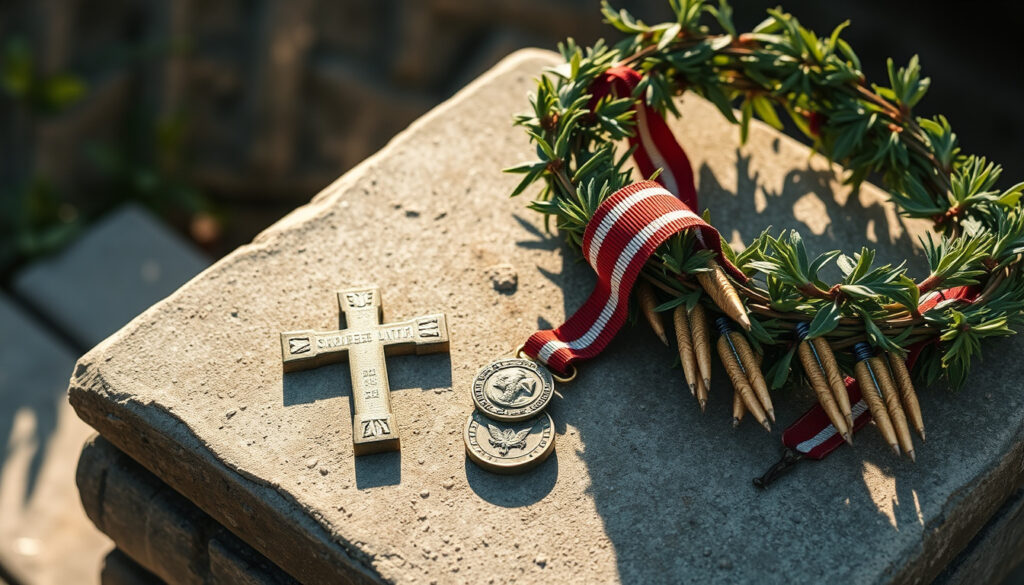
St. Sebastian: Patron of Soldiers, Athletes, and More
Few stories from the early church carry as many layers as that of St. Sebastian — a Roman soldier who secretly held to his Christian faith, paid for it with his life, and in death became one of the most recognized martyrs in Western art. If you’ve ever wondered why he’s always shown tied to a tree with arrows, or how a 3rd-century soldier became a symbol for athletes, the LGBTQ community, and even a Spanish city, you’re not alone.
Feast Day: January 20 ·
Year of Death: c. AD 288 ·
Patron of: Soldiers, athletes, and those who desire a saintly death ·
Canonization: Pre-Congregation (ancient)
Quick snapshot
- Roman soldier and secret Christian (Encyclopaedia Britannica)
- Martyred under Emperor Diocletian (Vatican State)
- Venerated as a saint since the 4th century (Catholic Online)
- Soldiers and athletes (Simply Catholic)
- Those who desire a holy death (St. Sebastian Parish, Belle Vernon)
- Plague victims and archers (Simply Catholic) (Simply Catholic)
- c. AD 255 — Born in Narbonne, Gaul (Encyclopaedia Britannica) (Associated & Catholic Colleges of WA)
- c. AD 288 — Martyred in Rome (Associated & Catholic Colleges of WA)
- Feast Day: January 20 (Vatican State) (Associated & Catholic Colleges of WA)
Seven key facts, one pattern: the life of St. Sebastian is a rare blend of military service, hidden faith, and a death that launched a thousand artworks.
| Attribute | Detail |
|---|---|
| Full Name | Sebastianus (Latin) |
| Birth | c. AD 255, Narbonne (modern France) |
| Death | c. AD 288, Rome |
| Feast Day | January 20 |
| Canonization | Pre-Congregational |
| Attributes | Arrows, palm of martyrdom, military attire |
| Patronages | Soldiers, athletes, plague victims, archers |
What is St. Sebastian the patron saint of?
Patron of Soldiers and Athletes
- St. Sebastian is traditionally the patron saint of soldiers, a reflection of his own service as a captain in the Praetorian Guard under Emperor Maximian (Encyclopaedia Britannica).
- He is also patron of athletes and archers, a patronage rooted in the physical discipline and endurance he displayed during his martyrdom (Simply Catholic).
- The Associated & Catholic Colleges of WA notes that Sebastian’s patronage extends to runners and sports more broadly, making him a favorite among athletic programs (Associated & Catholic Colleges of WA).
The implication: Sebastian’s military background and physical ordeal created a natural link to those who train, compete, and serve under orders.
Patron of a Holy Death
- Many Catholics pray to St. Sebastian for a holy death — the grace to receive last rites and die in a state of grace (St. Sebastian Parish, Belle Vernon).
- This patronage stems from his own willingness to face death rather than renounce his faith.
The pattern: Sebastian is invoked by those who want to face their final moments with the same courage he showed.
Other Patronages
- He is invoked against plagues and epidemics, a devotion that surged during the Black Death when he became one of the Fourteen Holy Helpers (Wikipedia).
- His patronage also includes archers, armorers, ironmongers, police officers, and enemies of religion (St. Sebastian Parish, Belle Vernon).
What this means: Sebastian’s patronage spans an unusually wide arc — from the battlefield to the sickbed, from athletes to plague victims — reflecting a saint whose story resonated across very different human experiences.
Is Saint Sebastian the patron saint of LGBTQ?
Historical Background
- The Vatican has not officially designated St. Sebastian as patron of LGBTQ individuals, and no formal ecclesiastical decree grants that title (Vatican State).
- Historically, Sebastian was venerated as a Roman martyr and soldier-saint, with no documented connection to same-sex attraction in the early church.
The catch: the absence of official designation hasn’t stopped the community from claiming him.
Modern Adoption by LGBTQ Community
- Since the 20th century, St. Sebastian has been widely adopted as a symbol by the LGBTQ community (Wikipedia).
- His image — a young, semi-nude man pierced by arrows — became a recurring motif in gay art, photography, and literature, often interpreted as an expression of concealed identity and suffering.
- The piercing arrows can be read as metaphors for stigma, rejection, or the “wounds” of being closeted, though this interpretation is symbolic, not doctrinal.
Church Stance
- The Catholic Church maintains its traditional teaching on sexuality and has not endorsed same-sex unions or a specific LGBTQ patronage (Catholic Online).
- At the same time, the Church recognizes Sebastian as a saint for all people, and no official statement forbids LGBTQ individuals from venerating him.
The trade-off: Sebastian’s story of hidden identity and redemptive suffering resonates deeply with a community that has historically faced persecution, even if the Church never intended that connection. The result is a split identity — officially a soldier-saint, unofficially a queer icon.
What do people pray to Saint Sebastian for?
Prayers for Protection
- People pray to St. Sebastian for protection from enemies, plagues, and sudden death (St. Sebastian Parish, Belle Vernon).
- His intercession is sought during epidemics — a devotion that spiked during medieval plague outbreaks and persists today in regions where infectious disease is a concern.
Prayers for Healing
- He is invoked by athletes for strength and endurance, and by those recovering from physical trauma (Simply Catholic).
- The association with healing stems from accounts of his survival after being shot with arrows — a narrative that suggests resilience and recovery.
Novena Intentions
- The St. Sebastian Novena is commonly prayed for recovery from illness, spiritual strength, and the grace of a holy death (Catholic Online).
- Many also pray it for protection during military service or athletic competition.
Why this matters: Sebastian’s prayer life reflects his own biography — people ask him for exactly what he himself endured and overcame: danger, bodily harm, and the final trial of death.
For an athlete preparing for a competition, a soldier deploying to a conflict zone, or a person facing a serious illness, St. Sebastian offers a model of courage under physical threat. His novena gives them a structured way to ask for that same grit.
What miracle did Saint Sebastian do?
Healing of a Roman Official’s Wife
- According to hagiographic tradition, Sebastian healed the wife of a fellow soldier while imprisoned, leading to her conversion (Encyclopaedia Britannica).
- This act of healing exposed his Christian faith and accelerated the events leading to his martyrdom.
Conversion of Fellow Soldiers
- Sebastian is credited with converting several Roman soldiers and officials to Christianity through his witness and miracles during his service (Vatican State).
- His dual role — a trusted officer who secretly preached the faith — made him a uniquely effective evangelist within the military.
Posthumous Miracles
- His intercession has been associated with miraculous recoveries from plague throughout history (Wikipedia).
- No single “official” miracle is formally recognized by the Church in a canonization process (Sebastian is a pre-Congregational saint, meaning he was venerated before the modern Vatican canonization process existed).
- However, many attributed miracles are recorded in hagiography, particularly healings during epidemic outbreaks.
The pattern: Sebastian’s miracles cluster around healing and conversion — two themes that emerge directly from his life story as a soldier who turned from violence to faith.
Which saint got roasted to death?
St. Lawrence vs. St. Sebastian
- This is a common point of confusion: St. Lawrence was martyred by being roasted on a gridiron, while St. Sebastian was shot with arrows and later clubbed to death (Encyclopaedia Britannica).
- Both are early Christian martyrs from the Roman persecutions, but their death methods are completely different.
Martyrdom of St. Lawrence
- Saint Lawrence was a deacon in Rome who was executed on a gridiron (a metal grate over fire) around AD 258 (Catholic Online).
- His feast day is August 10, and he is the patron saint of cooks, librarians, and the poor.
Martyrdom of St. Sebastian
- St. Sebastian was tied to a tree or post, shot with arrows by Roman archers, and left for dead (Saint Sebastian Church, Woodside).
- He survived the arrow attack, according to tradition, and was later beaten to death on the orders of Emperor Diocletian (St. Sebastian Parish, Belle Vernon).
The catch: because both saints are often depicted in art with instruments of torture — Lawrence with his gridiron, Sebastian with arrows — people understandably mix them up. The difference matters for anyone praying to the right saint for protection.
When someone prays for protection from fire — a gridiron martyr like St. Lawrence is a natural intercessor. When the concern is bodily harm from weapons or sudden death — that’s Sebastian’s domain. Knowing which saint died which way changes what you ask for.
The pattern: distinguishing the two martyrs prevents misdirected prayers and deepens understanding of each saint’s proper intercession.
What is San Sebastián famous for?
Culinary Scene
- San Sebastián (Donostia in Basque) is renowned for its Michelin-starred restaurants and pintxos — the Basque version of tapas (Encyclopaedia Britannica).
- The city has one of the highest densities of Michelin stars per capita in the world.
La Concha Beach
- La Concha Beach is one of the most famous urban beaches in Europe, a crescent-shaped bay that defines the city’s landscape.
- Its shell-like shape (“concha” means shell) and calm waters make it a major tourist destination.
San Sebastián International Film Festival
- The city hosts the prestigious San Sebastián International Film Festival, one of the most important film events in the Spanish-speaking world.
Basque Culture
- The city is a hub of Basque language, culture, and identity, with a distinct culinary and artistic tradition that sets it apart from the rest of Spain.
- It is named after Saint Sebastian, whose feast day is celebrated there with particular devotion.
The implication: the city of San Sebastián carries the saint’s name into a completely different world — one of tourism, gastronomy, and cinema — while his original story as a martyr remains largely unknown to most visitors walking along La Concha Beach.
How to Pray the St. Sebastian Novena
A novena is a nine-day period of prayer for a specific intention. The St. Sebastian Novena is often prayed by those seeking protection, healing, or spiritual strength. Here are the steps for praying it faithfully.
- Set your intention. Before beginning, clearly state what you are praying for — recovery from illness, protection during travel, strength in a competition, or the grace of a holy death. Write it down if it helps.
- Choose a nine-day period. The novena can be prayed at any time, but many begin it nine days before St. Sebastian’s feast day (January 20), ending on the feast itself (Vatican State).
- Recite the opening prayer. Begin each day with the Sign of the Cross and an opening prayer asking for St. Sebastian’s intercession. A standard opening: “O glorious St. Sebastian, who endured so many torments for love of Christ, pray for us.”
- Read the assigned daily reflection. Each day of the novena typically has a short meditation on an aspect of Sebastian’s life — his courage, his faith, his endurance under arrows, his final martyrdom.
- Pray one Our Father, Hail Mary, and Glory Be. These three foundational prayers anchor each day of the novena.
- Recite the St. Sebastian prayer. A traditional prayer: “Dear St. Sebastian, you were a soldier of the Roman army and a soldier of Christ. You bravely witnessed to your faith and suffered death for it. Help me to be strong in my faith and to endure all trials for love of Jesus.”
- Conclude with the closing prayer. End each day with a closing petition, thanking God for St. Sebastian’s example and asking for the grace of perseverance (Catholic Online).
Timeline of St. Sebastian’s Life and Legacy
- c. AD 255: Birth in Narbonne, Gaul (modern France) (Encyclopaedia Britannica)
- c. AD 280: Becomes a Roman soldier and captain of the Praetorian Guard under Emperor Maximian (Vatican State)
- c. AD 286: Discovers fellow Christians imprisoned; converts and heals them (Encyclopaedia Britannica)
- c. AD 288: Arrested for his faith, tied to a tree, and shot with arrows; survives (Saint Sebastian Church, Woodside)
- c. AD 288: Healed by a Christian widow; confronts Diocletian; clubbed to death (St. Sebastian Parish, Belle Vernon)
- 4th century: Burial on the Appian Way; basilica built over his tomb (Encyclopaedia Britannica)
- Medieval period: Becomes one of the Fourteen Holy Helpers, invoked against plague (Wikipedia)
- 20th century: Adopted as a symbol by the LGBTQ community (Wikipedia)
The pattern: Sebastian’s timeline spans nearly two millennia of veneration, from a 3rd-century Roman execution to a modern cultural icon — few saints have traveled that distance.
What’s Confirmed and What’s Unclear
Confirmed facts
- St. Sebastian was an early Christian martyr venerated in Rome (Encyclopaedia Britannica).
- His feast day is January 20 in the Catholic Church (Vatican State).
- He is the patron saint of soldiers and athletes (Simply Catholic).
- He is associated with arrows in artistic depictions (Catholic Online).
- His cult spread widely by the 4th century, and a basilica was built on his tomb on the Appian Way (Encyclopaedia Britannica).
What’s unclear
- The exact year of his birth and death vary across sources (c. AD 255 — c. AD 288) (Encyclopaedia Britannica).
- The precise location of his martyrdom differs among traditions — some say Rome, others give specific sites within the city (Vatican State).
- The historical accuracy of the story of his escape from arrows and subsequent death by clubbing is debated — hagiography mixes with history here (Saint Sebastian Church, Woodside).
- Feast day varies by tradition: January 20 in the Catholic Church, 18 December in the Eastern Orthodox tradition, and 14/15 February in the Ethiopian Orthodox Church (Wikipedia).
- Traditional accounts place his birth in Narbonne, but some sources suggest a Milanese origin; the exact details of his early life remain uncertain (Vatican State).
Readers looking for a single, definitive biography of St. Sebastian will find a gap between what historians can verify and what the faithful believe. The arrow-survival story, in particular, sits at the boundary of tradition and historical record — it’s believed by many but not provable by the standards of modern scholarship.
The balance: readers must decide where they place their trust between tradition and historical record.
Voices on St. Sebastian
“Sebastian is a Roman martyr who was buried on the Appian Way near the present Basilica of St. Sebastian.”
— Franciscan Media, a Catholic editorial source
“He is a saint who has been invoked against plagues and epidemics since the Middle Ages.”
— Wikipedia, summarizing centuries of devotional tradition
“Sebastian’s story of hidden identity and suffering has made him a powerful symbol for marginalized communities.”
— Contemporary commentary on LGBTQ adoption of the saint
For those seeking a patron who understands both physical courage and hidden struggle, St. Sebastian bridges two worlds. The soldier who served an empire while secretly serving his faith, who survived arrows only to face a second death, offers a model of endurance that speaks as powerfully to a 21st-century athlete or LGBTQ believer as it did to a 4th-century Christian. The choice for anyone drawn to his story is clear: to see him as a historical figure, a spiritual intercessor, or both — but never to forget that the arrows are only part of the picture.
saintsebastianwoodside.org, churchpop.com, youtube.com, facebook.com, stsebastian.org
While traditionally known as the patron of soldiers and athletes, St. Sebastians modern significance has also made him an unexpected symbol within the LGBTQ+ community.
Frequently asked questions
When is St. Sebastian’s feast day?
St. Sebastian’s feast day in the Catholic Church is January 20 (Vatican State). The Eastern Orthodox Church commemorates him on December 18, and the Ethiopian Orthodox Church on February 14 or 15 (Wikipedia).
Where is St. Sebastian buried?
St. Sebastian is buried on the Appian Way in Rome, in the catacombs that now bear his name. The Basilica of St. Sebastian was built over his tomb (Encyclopaedia Britannica).
Why is St. Sebastian often depicted with arrows?
Arrows symbolize his first martyrdom — he was tied to a tree or post and shot with arrows by Roman archers. This became his defining attribute in art (Catholic Online).
What symbols are associated with St. Sebastian?
His primary symbols are arrows, a palm of martyrdom, military attire, and sometimes a crown or a tree. The arrows are by far the most recognizable (St. Sebastian Parish, Belle Vernon).
Is St. Sebastian the patron of athletes?
Yes, St. Sebastian is the patron saint of athletes, as well as archers and soldiers (Simply Catholic).
How to pray the St. Sebastian novena?
The novena is prayed over nine consecutive days, typically ending on January 19, the eve of his feast. Each day includes an opening prayer, a reflection on his life, an Our Father, Hail Mary, and Glory Be, and the St. Sebastian prayer (Catholic Online).
What is the full name of St. Sebastian?
His Latin name is Sebastianus. In most Western languages he is simply known as Sebastian or St. Sebastian (Encyclopaedia Britannica).
Are there any movies about St. Sebastian?
Yes, the most famous is the 1976 film “Sebastiane” by Derek Jarman, a groundbreaking film in Latin that portrays Sebastian’s life and martyrdom with a focus on homoerotic themes. The saint has also appeared in various other films and television series about early Christian martyrs.
More related posts
 Dept Q Season 2: Renewal, Release Date, Cast & Book Adaptation
 Denise Drysdale at 75: Health, Home, and Friendship
 Golden Goose Shoes: Why They’re So Expensive in 2026
 Percy Jackson and the Olympians: Season 2, Age, LGBTQ+ Guide
 Is Fortnite Down – Live Status Check Right Now
 Karl-Anthony Towns: Bio, Contract, Relationship & Knicks Career
 Westpac Contact Number: How to Call from Australia & Overseas
 Hans Zimmer: Biography, Awards, Tour 2026 & Most Famous Pieces
