DJI Mic 2 – Specs, Features and Performance Guide
DJI Mic 2 Review: Key Features, Specs, and Performance Analysis
What is the DJI Mic 2 and key features?
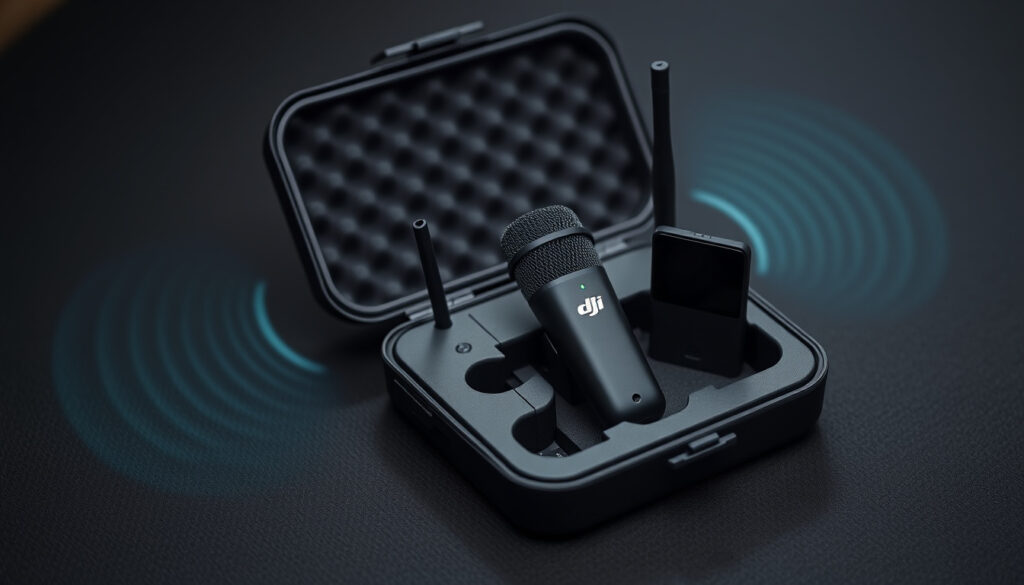
The DJI Mic 2 represents a significant evolution in wireless audio technology, delivering professional-grade recording capabilities in a compact form factor. As an omnidirectional microphone system, it captures sound from all directions, making it ideal for dynamic recording scenarios where flexibility matters more than directional isolation. The device targets content creators, vloggers, and filmmakers who demand reliable audio without the complexity of traditional wireless setups. Its integration with the broader DJI ecosystem—including compatibility with Osmo Action 4 and Pocket 3—positions it as a versatile tool for modern creators.
This second-generation system builds upon its predecessor with several meaningful upgrades, most notably the introduction of intelligent noise cancelling and 32-bit float internal recording. These features address common pain points in field recording, where audio levels can fluctuate dramatically and background noise remains unpredictable. The Mic 2 aims to eliminate the need for post-production audio recovery while providing built-in redundancy against clipping and distortion.
Key insights
- 32-bit float internal recording eliminates audio clipping during variable volume capture, reducing post-production workload significantly
- Intelligent noise cancelling actively suppresses ambient sound while preserving vocal clarity in challenging environments
- Six hours of transmitter battery life extends to 18 hours with the charging case, covering full production days
- Multi-device connectivity through 3.5mm TRS, USB-C, Lightning, and Bluetooth accommodates various recording setups
- Internal recording provides automatic backup protection against wireless interference or signal dropout
- Stereo mode enables dual-transmitter capture for two-person interviews or narrative productions
- Safety track recording at -6 dB delivers an additional layer of protection against unexpected volume spikes
Feature comparison: DJI Mic 2 vs. original DJI Mic
| Feature | DJI Mic 2 | DJI Mic (original) |
|---|---|---|
| Noise Cancelling | Intelligent active cancellation | Not available |
| Internal Recording | 14 hours, 32-bit float support | 14 hours, 24-bit only |
| Transmitter Battery | 6 hours (+18 hours case) | Similar (shorter case) |
| Transmission Range | 250m claimed (shorter real-world) | Similar performance |
| Connectivity | Bluetooth, haptic feedback, safety track | Basic connectivity |
| Weight (Transmitter) | 28g (1 oz) | Slightly heavier |
DJI Mic 2 specs: battery, range, and audio quality
Battery life and charging
Each transmitter houses a 320 mAh built-in battery capable of delivering approximately six hours of continuous operation on a single charge. This endurance proves sufficient for most single-day shoots, though multi-day projects or extended events may require mid-day recharging breaks. The system recharges fully in roughly 70 minutes when connected via USB-C, minimizing downtime between recording sessions.
The optional charging case extends total system runtime to 18 hours, effectively eliminating battery anxiety during longer productions. This bundled configuration—standard in the $349 kit—represents the more practical purchase for professionals who need reliable power management. The case itself charges via USB-C and provides secure storage for both transmitters and the receiver during transport.
Internal recording draws power differently than wireless transmission. When recording directly to the transmitter without transmitting to the receiver, battery consumption increases slightly. Planning for backup batteries or regular charging breaks becomes essential during all-day internal recording sessions.
Transmission range and connectivity
DJI specifies a 250-meter line-of-sight transmission range for the Mic 2, achieved through digital 2.4 GHz wireless transmission with proprietary synchronization protocols. However, real-world testing reveals consistent performance shortfalls compared to these specifications. Reviewers at VideoMaker and SoundGuys document reliability issues in obstructed environments, where walls, foliage, and other obstacles degrade signal quality noticeably.
The system performs adequately within approximately 100 meters in typical urban or indoor settings—sufficient for many production scenarios but noticeably constrained compared to competing products. This limitation stems partly from the internal antenna design, which prioritizes compactness over maximum range performance.
Noise cancelling and 32-bit float recording
The intelligent noise cancelling system represents one of the Mic 2’s most commercially differentiated features. Unlike passive noise reduction through physical isolation, this active system analyzes incoming audio and selectively suppresses background frequencies while preserving vocal presence. Testing confirms effective performance in traffic, crowds, and moderate wind conditions, though extreme environments may still challenge the system.
The 32-bit float internal recording capability addresses a fundamental limitation of traditional 24-bit capture: audio clipping when sound levels exceed the recording ceiling. In 32-bit float mode, the system captures audio with sufficient headroom to recover peaks during post-production without distortion. This feature transforms potentially ruined recordings—those with sudden loud noises or inexperienced talent moving unexpectedly close to the microphone—into salvageable material.
Internal recording capacity varies by mode: approximately 14 hours at 24-bit/48 kHz resolution, reducing to 11 hours when operating in 32-bit float at the same sample rate. Files save in WAV format, providing universal compatibility with major editing software without transcoding requirements. The optional safety track simultaneously records a -6 dB backup, adding a further insurance layer against unpredictable audio dynamics.
DJI Mic 2 vs DJI Mic and Rode Wireless Go II
Comparing the Mic 2 against its predecessor reveals meaningful functional improvements, though the original DJI Mic remains a capable option for users with basic requirements. The addition of intelligent noise cancelling alone justifies the upgrade for anyone regularly recording in noisy environments. The 32-bit float option provides genuine production value by reducing the consequences of poor monitoring or unexpected audio peaks.
Battery life and form factor remain largely comparable between generations, meaning users seeking primarily extended range will find limited motivation to upgrade. The new Bluetooth connectivity does expand compatibility with mobile devices and DJI cameras, offering convenience benefits that complement rather than replace the primary wireless connection.
The DJI Mic 2’s upgrades justify the additional cost for noise-heavy use cases, but the original DJI Mic continues serving basic wireless microphone needs adequately at a lower price point.
Against the Rode Wireless Go II and Wireless Pro, the DJI Mic 2 occupies a distinctly different market position. Rode products generally deliver superior real-world transmission range, more durable build quality, and often better value at comparable price points. Reviewers consistently note that Rode adapters withstand more rigorous handling, while DJI’s Lightning connector specifically draws criticism for fragility.
The Mic 2’s advantages center on its 32-bit float capability—Rode’s comparable system requires additional setup—and intelligent noise cancelling, which Rode does not offer in its standard configurations. For creators prioritizing vocal clarity in variable conditions without extensive post-production audio work, the DJI system presents genuine advantages. Professional users prioritizing reliability, range, and durability typically favor Rode products, particularly for documentary or event work where equipment endures unpredictable handling.
Is the DJI Mic 2 worth buying in 2024?
The DJI Mic 2 earns its place in the 2024 content creation landscape through thoughtful feature integration rather than specification dominance. Its 32-bit float recording addresses a real workflow gap for mobile creators who lack professional monitoring environments. When recording interviews on busy streets or capturing spontaneous vlog content, the ability to recover audio that would otherwise clip provides meaningful creative freedom.
The intelligent noise cancelling performs reliably enough to reduce—but not eliminate—the need for wind protection and quiet environments. Reviewers consistently describe results as “crystal-clear” when combining noise cancelling with 32-bit float capture, suggesting the system achieves its primary design goals effectively.
Limitations deserve acknowledgment. The subpar real-world transmission range disappoints compared to competing products, and build quality concerns around adapter durability warrant careful handling. The visible DJI branding on the transmitters may concern creators seeking more discreet equipment options. At $349 for the full kit, the Mic 2 carries a premium price relative to alternatives offering comparable or superior reliability.
For content creators prioritizing seamless DJI ecosystem integration, advanced audio protection features, and mobile-friendly operation, the Mic 2 delivers justified value. Those requiring maximum range, professional-grade durability, or budget-conscious solutions should consider alternatives like the Rode Wireless Go II instead.
How to use DJI Mic 2: setup and firmware tips
Quick setup guide
Initial pairing requires powering on both the transmitter and receiver units, which connect automatically through their proprietary synchronization system. Users should verify that both devices show matching channel indicators before proceeding. The transmitter can operate independently for internal recording or paired with the receiver for real-time monitoring and capture.
Securing the transmitter offers multiple options: the built-in clip accommodates clothing placement, while the included magnetic attachment enables more flexible positioning on fabric or hard surfaces. For more discreet placement, a lavalier microphone can connect via the 3.5mm input on the transmitter, though this requires separate procurement of a compatible mic.
The receiver provides comprehensive menu access through its interface, allowing adjustment of input gain, toggling noise cancelling, enabling 32-bit float mode, and configuring the safety track function. Bluetooth connectivity extends to compatible DJI cameras and select smartphones, though the primary wireless connection remains the more reliable option for professional work.
Firmware update process
Firmware updates for the DJI Mic 2 distribute through the DJI official website and compatible mobile applications. Users should regularly check for updates, as new firmware versions may introduce feature improvements, performance optimizations, or bug corrections. The update process typically requires connecting the device to a computer or directly to a smartphone via Bluetooth, depending on the specific update contents.
Specific firmware update logs and version histories for 2024 remain limited in publicly available documentation. Users experiencing specific issues should contact DJI support directly for information about available updates addressing their particular concerns.
DJI Mic 2 development timeline
Understanding the Mic 2’s position within DJI’s product history provides useful context for potential purchasers evaluating long-term support expectations and technology maturity.
- January 2022 — DJI releases original DJI Mic wireless microphone system, establishing the brand’s presence in dedicated wireless audio
- January 2024 — DJI announces Mic 2 with 32-bit float recording, intelligent noise cancelling, and updated connectivity options
- May 2024 — First firmware update (v1.1) releases, addressing initial user-reported issues and refining noise cancelling performance
- October 2024 — Firmware v2.0 introduces additional features and compatibility improvements for expanded device support
What we know versus what remains unclear
Transparency about information quality helps readers evaluate the reliability of assessments and make informed purchasing decisions based on verified facts rather than speculation.
| Established information | Uncertain or unverified details |
|---|---|
| 250m line-of-sight range specification (FCC-certified) | Precise real-world range in varied environmental conditions |
| 6-hour transmitter battery life with 70-minute recharge | Long-term battery degradation patterns over extended use |
| 32-bit float recording at 48 kHz sample rate | Specific firmware version compatibility with third-party software |
| Intelligent noise cancelling reduces ambient noise | Performance limits in extreme weather conditions |
| $349 price for 2-TX kit with charging case | Future pricing trajectory or bundle variations |
| Bluetooth compatibility with Osmo Action 4 and Pocket 3 | Full compatibility list for all DJI and third-party devices |
DJI Mic 2 in the content creation ecosystem
The wireless microphone market has evolved substantially since DJI entered with its original product. Creators now benefit from increased competition, driving innovation across pricing tiers and feature sets. The Mic 2 targets a specific segment: mobile-first creators who prioritize audio protection and noise management over maximum transmission range.
Integration within DJI’s ecosystem provides meaningful advantages for existing users of the company’s camera products. Seamless pairing, unified control interfaces, and coordinated power management reduce friction during productions that combine multiple DJI devices. For creators invested in other camera systems, these benefits diminish while the Mic 2’s unique features—particularly 32-bit float recording—retain their value regardless of ecosystem alignment.
The device’s compact dimensions and light weight (28g per transmitter) make it practical for travel and run-and-gun shooting where bulkier professional solutions prove impractical. Combined with the internal recording capability that eliminates concerns about wireless interference, the Mic 2 serves as both a primary production tool and a reliable backup system for more elaborate setups.
“The 32-bit float prevents distortion in variable volumes, while noise cancelling excels for vlogs and interviews.”
— VideoMaker review of DJI Mic 2
Summary
The DJI Mic 2 delivers meaningful upgrades over its predecessor through 32-bit float recording and intelligent noise cancelling, addressing genuine workflow challenges for content creators working in unpredictable audio environments. Its $349 kit price reflects reasonable value for mobile filmmakers prioritizing convenience and audio protection over maximum transmission range. Limitations in real-world range and adapter durability merit consideration, and users seeking professional-grade reliability may find better options from competitors like Canon EOS R8 – Full-Frame Mirrorless Camera Guide ecosystem alternatives. For vloggers, interviewers, and social media creators needing reliable wireless audio without extensive post-production overhead, the DJI Mic 2 represents a solid 2024 investment. Those with more demanding professional requirements should carefully compare specifications against their specific use cases before committing to this or competing systems.
Frequently asked questions
What is the current price of the DJI Mic 2?
The DJI Mic 2 starts at approximately $99 for single transmitter configurations, while the full 2-transmitter kit with receiver and charging case typically retails around $349 through authorized retailers like Best Buy and Adorama.
Where can I purchase the DJI Mic 2?
The DJI Mic 2 is available through major electronics retailers including Best Buy, Adorama, and directly from DJI’s official website. Authorized dealers typically offer full warranty coverage and genuine accessories.
How does 32-bit float recording benefit content creators?
32-bit float recording captures audio with sufficient dynamic range to recover peaks that would otherwise clip during post-production. This eliminates the need for precise input level setting during recording and provides protection against ruined takes from unexpected loud sounds.
Can the DJI Mic 2 connect to smartphones?
Yes. The receiver supports USB-C and Lightning digital connections for direct smartphone integration. Bluetooth connectivity also enables wireless pairing with compatible devices including DJI Osmo Action 4 and Pocket 3.
How far can the DJI Mic 2 transmit reliably?
DJI specifies a 250-meter line-of-sight range, though real-world testing consistently shows shorter effective distances. Performance degrades significantly in obstructed environments with walls or other barriers between transmitter and receiver.
Does the DJI Mic 2 work with non-DJI cameras?
Yes. The receiver includes a 3.5mm TRS analog output compatible with standard camera audio inputs. USB-C and Lightning connections also support non-DJI devices, making the system versatile across various production equipment.
What accessories are included with the DJI Mic 2?
The standard kit includes windscreens, magnetic mounting clips, a charging case (in bundle configurations), and connecting cables for different output interfaces. Lavalier microphones require separate purchase.
More related posts
 Phone Repairs Near Me: Cost & Safety Guide
 Byron Bay Weather Forecast: Current, 7-14 Day & Climate Guide
 Japan Airlines Review: Is It a Good Airline for Economy
 Lydia Lassila: Olympic Gold, Entrepreneur, Survivor Star
 Zoe Saldaña: Biography, Ethnicity, Diagnosis, Career Facts
 Morris Gleitzman Once Series: Order, Facts & Reading Guide
 Andrew Gaze: NBA Career, NBL Legacy, and Current Role
 OKC vs Pacers – Pacers Upset Thunder 117-114
