Night Vision Goggles – Generations, Technology and Buying Guide
Night vision goggles have transformed how people navigate and operate in low-light environments. Whether for hunting, tactical operations, wildlife observation, or security applications, these devices amplify minimal ambient light to create usable images in conditions where the naked eye sees nothing. Understanding the technology behind night vision, its generations, legal considerations, and practical applications helps buyers make informed decisions when investing in this specialized equipment.
The market offers options ranging from entry-level devices under a few hundred dollars to military-grade systems exceeding ten thousand dollars. Each category serves different needs, and the gap between consumer and professional-grade technology continues to narrow as digital innovations disrupt traditional analog systems. This guide covers everything from fundamental principles to buying recommendations for 2025.
What Are Night Vision Goggles and How Do They Work?
Image Intensification
$100 – $10,000+
Hunting, Tactical, Wildlife
Gen 1 through Gen 4
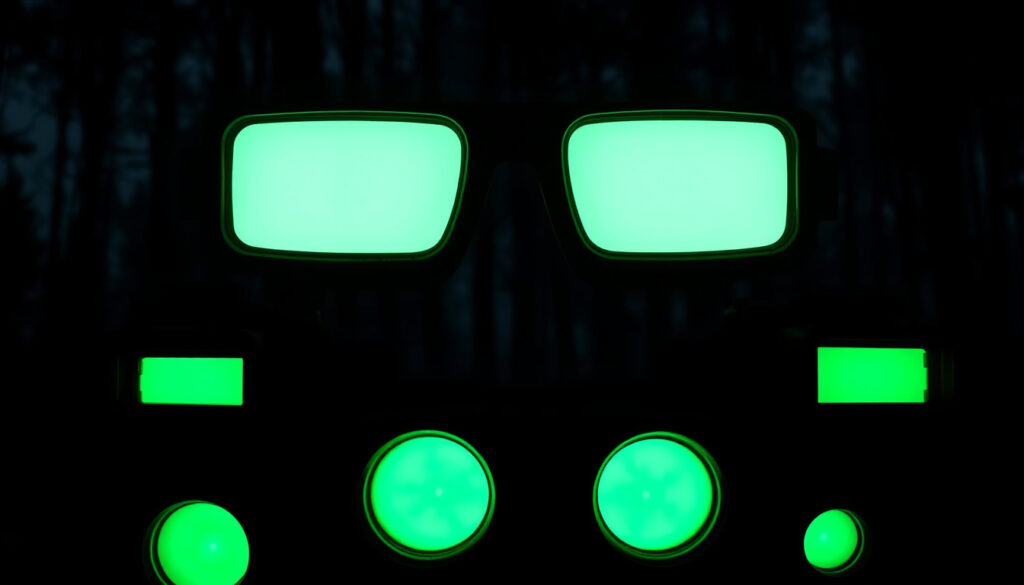
Night vision goggles function by collecting ambient light through an objective lens, converting photons into electrons via a photocathode, multiplying those electrons through an image intensifier tube, and projecting the resulting image onto a phosphor screen. The viewer sees a green-hued image because the phosphor screen emits light in the green spectrum, which the human eye perceives most efficiently in low-light conditions.
This process, called image intensification, differs fundamentally from thermal imaging, which detects heat signatures rather than reflected light. Modern devices also incorporate digital CMOS sensors and fusion capabilities that combine multiple technologies for enhanced situational awareness.
- Gen 3 tubes offer 50,000+ hour operational life with proper maintenance
- Auto-gated Gen 3 systems prevent image “blooming” from bright light sources
- Digital night vision captures 4K resolution in current models
- US civilians can legally own night vision devices with some restrictions
- Thermal imaging operates independently of available light
- Generation classification applies only to analog image intensification technology
| Generation | Effective Range | Price Range | Key Technology |
|---|---|---|---|
| Gen 1 | Limited | $100 – $400 | Basic phototube |
| Gen 2 | ~200 yards | $1,500 – $3,000 | Micro-channel plate (MCP) |
| Gen 3 | 300+ yards | $3,000 – $10,000+ | Gallium arsenide photocathode |
| Gen 4 | Improved over Gen 3 | $5,000+ | Filmless/gated technology |
Night Vision Generations: Gen 1 vs Gen 2 vs Gen 3
Generation 1: The Foundation
Gen 1 represents the earliest commercially available night vision technology, serving as the foundation for all subsequent generations. These devices use basic phototube technology and remain the most affordable entry point for civilians interested in night observation. While specific performance metrics vary between manufacturers, Gen 1 systems provide functional low-light capability for casual use.
Generation 2: Significant Advancement
The introduction of the micro-channel plate (MCP) in Gen 2 devices marked a substantial leap forward in image quality. Second-generation systems achieve image enhancement and magnification of 25,000 to 50,000 times, enabling observation capability that far exceeds first-generation equipment in low-light environments.
These devices can utilize faint starlight illumination and generally do not require infrared auxiliary lighting unless operating in complete darkness. Gen 2 significantly improves clarity, brightness, and range while offering sharper images with reduced noise and notably improved resolution that provides better detail and contrast.
Serious hunters and law enforcement professionals often favor Gen 2 for the balance of reliable performance without the steep cost of military-grade optics. Effective range reaches approximately 200 yards under typical conditions.
Generation 3: Military-Grade Performance
Gen 3 devices feature gallium arsenide (GaAs) photocathodes that dramatically enhance sensitivity and extend the spectral range into the near-infrared spectrum (450-950 μm). A lanthanum ion film coating on the anode tube surface extends operational lifespan while achieving sensitivity ratings of 800 μA/lm in the near-infrared spectrum.
Third-generation systems deliver effective ranges exceeding 300 yards with superior image resolution, clarity, and brightness compared to earlier generations. Enhanced contrast and reduced halo effect provide cleaner visuals in challenging conditions. GaAs photocathode technology dramatically increases sensitivity compared to Gen 2, enabling operation during overcast and moonless nights.
Auto-gated Gen 3 models represent the standard for US military and special forces operations. The automatic gating capability allows operation across all light conditions while resisting the “blooming” effect that distorts images when bright lights enter the field of view. This feature proves particularly valuable in urban environments or scenarios involving artificial lighting.
Gen 3 tubes with sensitivities above 1800 are generally considered premium. If budget allows, prioritizing tube quality over generation rating often yields better real-world results.
Night Vision Goggles vs Thermal Imaging: Key Differences
How the Technologies Differ
The fundamental distinction between night vision and thermal imaging lies in what each technology detects. Night vision amplifies existing light, including starlight, moonlight, and ambient artificial light, to create visible images of the environment. Thermal imaging detects infrared radiation emitted by objects themselves, displaying temperature differences rather than reflected light.
This difference creates distinct advantages for each approach. Night vision provides detailed visual information including texture, text, and facial features. Thermal imaging reveals living things and heat sources regardless of lighting conditions, making it effective in complete darkness, fog, smoke, and environments where traditional night vision struggles.
Advantages and Limitations
Thermal devices excel at detecting people and warm-blooded animals because they respond to body heat rather than reflected light. They operate effectively without any ambient light whatsoever, making them invaluable for firefighting, search and rescue, and military applications where light sources may be unavailable or undesirable.
However, thermal imaging does not provide fine visual details or facial recognition capabilities. Images display heat signatures in various color palettes, with warmer objects appearing brighter or differently colored than cooler surroundings. Battery consumption typically runs higher than traditional night vision, requiring additional power management in field conditions.
Night vision requires some ambient light to function effectively, though advanced generations perform remarkably well under minimal illumination. The phosphor-screen image provides detailed visual information that thermal systems cannot match, making night vision preferable for navigation, reading, and detailed observation tasks.
Some modern devices combine both technologies, overlaying thermal data onto night vision images for enhanced situational awareness. These fusion systems represent the cutting edge but command premium prices.
Are Night Vision Goggles Legal and How Far Can They See?
Legal Considerations for Civilians
Night vision devices are generally legal for US civilians to purchase and own, though regulatory considerations apply. The devices fall under export control regulations administered by the State Department through the International Traffic in Arms Regulations (ITAR), which restrict technology transfer to foreign persons both domestically and abroad.
Certain configurations and specifications may fall under additional restrictions, particularly older military-grade equipment. Prospective buyers should verify that any device they consider purchasing comes with clear documentation regarding its legal status for civilian ownership. State and local regulations may also impose additional requirements in some jurisdictions.
Range Capabilities by Generation
Effective range depends on multiple factors including generation, ambient light conditions, weather, and target characteristics. Gen 2 systems typically achieve effective observation ranges of approximately 200 yards. Gen 3 extends this to over 300 yards under favorable conditions, while Gen 4 provides improved target detection range compared to Gen 3.
Thermal imaging historically demonstrated detection capability exceeding 430 yards in early demonstrations from 1901 that identified a cow at that distance. Modern thermal systems offer substantially improved performance, though range specifications vary considerably between models and manufacturers.
The search results provided do not contain comprehensive information regarding ITAR export rules, detailed battery life specifications, or specific maintenance protocols. For complete regulatory and technical guidance, consulting product-specific documentation and regulatory sources is recommended.
Best Night Vision Goggles: Cost, Recommendations and Buying Guide
Budget Options Under $500
Digital night vision devices have democratized access to night observation technology for budget-conscious buyers. Options in this range provide functional capability for casual wildlife observation, camping, and basic security applications. CMOS sensor technology enables full-color daytime imaging alongside night vision capability, offering versatility that appeals to many users.
Entry-level digital devices typically cannot match the low-light performance of analog Gen 2+ systems, but they provide an accessible starting point for those exploring night vision before committing to more significant investments.
Mid-Range Recommendations
Gen 2 devices priced between $1,500 and $3,000 offer the best balance of performance and cost for serious hunters and law enforcement professionals. These systems deliver reliable low-light capability without the premium pricing of military-grade optics. The micro-channel plate technology provides substantial improvement over Gen 1 while remaining accessible to non-government buyers.
Professional and Tactical Options
Gen 3 remains the standard for professional and tactical applications where reliability and performance cannot be compromised. Prices ranging from $3,000 to over $10,000 for top-tier units reflect the advanced technology and rigorous manufacturing standards required for military adoption. Auto-gated variants provide additional capability for dynamic lighting environments.
Gen 4 targets governmental organizations and elite tactical units where the additional cost justifies marginal performance improvements over Gen 3 for specialized applications.
For most civilian applications, a quality Gen 2 or digital system provides the best value. Higher generations offer diminishing returns for non-professional users, though tube quality within each generation matters more than generation rating alone.
The Evolution of Night Vision Technology
Night vision development accelerated significantly during World War II with early infrared technology applications. The technology progressed substantially through the 1960s as the US military began deploying first-generation devices operationally.
- 1930s: Early infrared technology development begins for military applications
- 1960s: US Military deploys first-generation night vision devices operationally
- 1980s: Introduction of Gen 2 and Gen 3 technologies dramatically improves performance
- 2000s: Digital night vision emerges as accessible alternative to analog systems
- 2010s-2020s: Fusion technology combining night vision with thermal imaging advances
Thermal imaging developed separately from the generation classification system, with early advances dating back to 1901. Military applications during the 1970s produced significant breakthroughs that eventually filtered into civilian markets. The convergence of multiple technologies now offers users capabilities that would have seemed like science fiction to early pioneers in the field.
What We Know and What Remains Unclear
| Established Information | Areas Requiring Further Research |
|---|---|
| Image intensification works by amplifying available light through photocathode and intensifier tube technology | Specific ITAR compliance requirements for individual device configurations |
| Gen 2+ systems require no infrared illuminator under typical low-light conditions | Detailed battery life specifications across different manufacturers and models |
| Gen 3 with GaAs photocathodes provides superior performance to earlier generations | Real-world hunting testing data for specific environmental conditions |
| Thermal imaging detects heat signatures rather than reflected light | Specific maintenance protocols for extended tube life optimization |
| US civilians can legally own night vision devices with certain restrictions | Airsoft-specific application requirements and recommendations |
Industry Sources and Technical Standards
The night vision industry relies on several key organizations and standards to define performance specifications. Figure of Merit (FOM) ratings provide standardized measures for comparing tube quality across manufacturers, combining resolution and signal-to-noise ratio into a single comparable metric.
Military specifications and manufacturer documentation provide the most reliable performance data, though independent testing results vary in methodology and reporting standards.
Major manufacturers including ATN, AGM, Sightmark, and FLIR publish detailed technical specifications that buyers can use for comparison shopping. Understanding terminology such as line pairs per millimeter (lp/mm), signal-to-noise ratio, and photocathode sensitivity helps evaluate relative value across competing products.
For specific applications like hunting or tactical operations, consulting manufacturer documentation and verified user reviews provides practical insight beyond laboratory specifications. Comparing devices with similar technology and price points often reveals meaningful performance differences that specifications alone may not capture.
Making Your Night Vision Decision
Choosing the right night vision equipment requires balancing intended use, budget constraints, and performance expectations. Digital options provide accessible entry points for casual users seeking basic low-light capability. Gen 2 delivers substantial improvement for serious applications without requiring military-grade investment. Gen 3 and beyond serve professional and tactical users where reliability and performance justify premium pricing.
Understanding the distinction between generation ratings and actual tube quality matters significantly when comparing options. A well-manufactured Gen 2 tube may outperform a poorly-made Gen 3 unit in real-world conditions. Visiting demonstration facilities when possible allows hands-on evaluation before committing to a purchase.
For those comparing imaging technologies across different applications, similar evaluation approaches apply whether selecting night vision equipment or assessing other optical systems like the Pixel 9 Pro camera specifications or reviewing options in the photography space like the Canon EOS R8.
What are the main differences between Gen 1, Gen 2, and Gen 3 night vision?
Gen 1 uses basic phototube technology with limited range. Gen 2 adds a micro-channel plate achieving 25,000-50,000x amplification and ~200 yard range. Gen 3 features gallium arsenide photocathodes with 300+ yard range and superior image quality, commonly used by military and law enforcement.
How far can night vision goggles actually see?
Effective range varies by generation: Gen 2 reaches approximately 200 yards, Gen 3 exceeds 300 yards, and Gen 4 improves further. Actual performance depends on ambient light conditions, weather, and target characteristics.
What is the difference between night vision and thermal imaging?
Night vision amplifies existing light to create visible images, while thermal imaging detects infrared heat signatures emitted by objects. Thermal works in complete darkness but provides less visual detail; night vision offers detailed imagery when some ambient light exists.
Can civilians legally buy night vision goggles in the United States?
Night vision devices are generally legal for US civilians to purchase and own, though export controls and certain configurations may have restrictions. Buyers should verify compliance documentation for specific devices.
Are digital night vision devices a good alternative to analog systems?
Digital night vision provides an affordable option with solid clarity for casual users. CMOS sensors offer 4K resolution and full-color daytime imaging, though low-light performance typically cannot match analog Gen 2+ systems.
What maintenance do night vision goggles require?
Proper storage, careful handling, and avoiding exposure to bright light sources extends tube life significantly. Gen 3 tubes commonly provide 50,000+ hours of operational life with appropriate care.
Is Gen 4 worth the additional cost over Gen 3?
For most users, Gen 3 provides the best balance of performance and value. Gen 4 advantages over Gen 3 are marginal for civilian applications, with the technology primarily targeting government agencies and elite tactical units.
More related posts
 Zoe Saldaña: Biography, Ethnicity, Diagnosis, Career Facts
 Ali Larter: Biography, Children, Net Worth, and Career Comeback
 La Vie Est Belle: Meaning, Scent, Popularity & Celebrity Fans
 Molly-Mae Hague: Net Worth, Love Island, Relationship & Teeth
 Weekly Tax Table – 2024 IRS Withholding Methods Guide
 Michelle Pfeiffer Biography: Age, Husband, Children & Movies
 Tim Berners-Lee: Inventor of the Web, Projects & Biography
 Bench Seat History, Disappearance & DIY Build Guide
