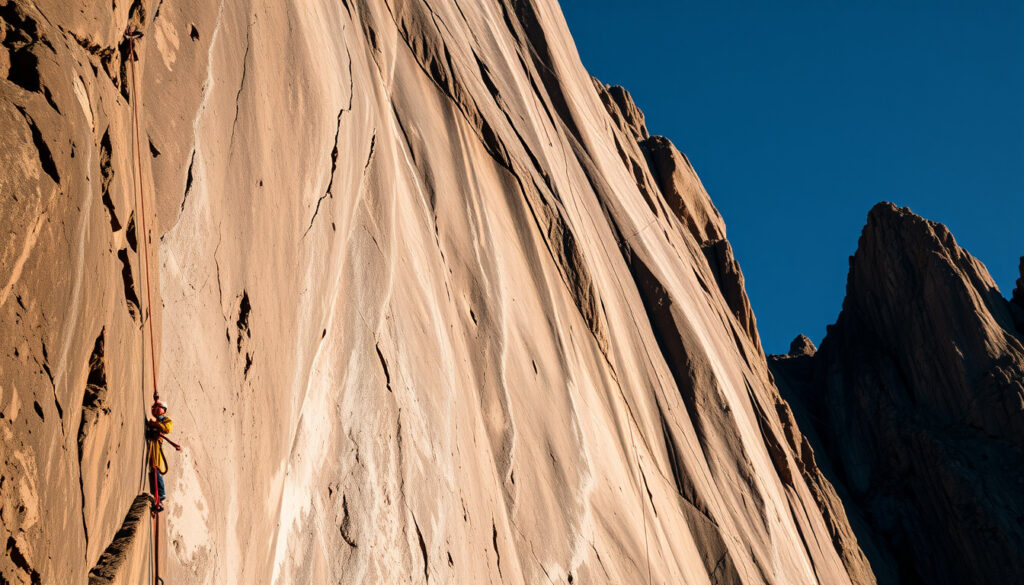
El Capitan: Height, Climbing, History, and Fatalities
There’s a reason climbers, hikers, and dreamers all look up at El Capitan and feel a mix of awe and a little fear. This 3,000-foot granite giant in Yosemite National Park is the ultimate test of skill and nerve, a place where history is made and, sometimes, where things go tragically wrong.
Height: 3,000 ft (914 m) ·
Location: Yosemite National Park, California, USA ·
First ascent: 1958 by Wayne Merry, George Whitmore, and Rich Calderwood ·
First free solo: Alex Honnold in 2017 ·
Climbing fatalities (recorded): Over 30 since the 1900s ·
Annual climbers: Thousands of parties attempt The Nose route each year
Quick snapshot
- El Capitan is 3,000 ft (914 m) tall (Yosemite.com destination guide)
- Alex Honnold free soloed El Capitan in 2017 (Yosemite.com destination guide)
- Over 30 climbing deaths have been recorded on El Capitan (Yosemite.com destination guide)
- Exact number of deaths worldwide for all routes is debated due to unreported accidents
- The origin of the name is sometimes attributed to Spanish explorers before 1851
- 1851: Mariposa Battalion names El Capitan
- 1958: First ascent of The Nose
- 2015: First free ascent of Dawn Wall by Tommy Caldwell and Kevin Jorgeson
- New speed records and free ascents continue to be set each season
- Safety equipment and techniques evolve to reduce fatality rates
The stats in the table below consolidate the key physical and climbing data for El Capitan.
| Attribute | Value |
|---|---|
| Elevation | 7,573 ft (2,308 m) |
| First recorded ascent | 1958 |
| Rock type | Granite (El Capitan Granite) |
| Number of routes | Over 100 |
How many climbers died on El Capitan?
Recorded fatalities since the 1900s
- Former Yosemite ranger Charles “Butch” Farabee told the San Francisco Chronicle regional newspaper that since 1905, 31 climbers had died on El Capitan.
- The National Park Service federal land management agency reports 51 climbers died from traumatic injuries across Yosemite in the period covered by its safety page.
- A Korean climbing guide died on El Capitan in September 2024, as reported by SFGATE Bay Area news outlet, adding to the tally.
The implication: the fatality count on El Capitan is sobering but static relative to the volume of climbs. The rare high-profile accident grabs headlines, but the real story is the constant, lower-profile toll.
Common causes of accidents
- The National Park Service federal land management agency attributes many deaths to human factors: ignorance, casual attitude, and distraction.
- Leader falls accounted for only 25% of fatal and near-fatal traumatic injuries in Yosemite climbing incidents.
- Roughly 40% of fatal and near-fatal traumatic injuries were caused by simple mistakes with gear.
- Roughly 25% were caused by being deliberately unroped.
- Roughly 10% were caused by rockfall.
Safety improvements over time
The National Park Service federal land management agency notes that climbing fatalities and injuries in Yosemite were often preventable. Safety gear — helmets, dynamic ropes, cams, and communication devices — has improved dramatically, but the National Park Service federal land management agency reports more than 100 climbing accidents occur in the park every year.
The pattern: gear gets better, but human nature stays the same. The fatality rate relative to attempts has dropped, yet the raw numbers remain stubbornly high because more people climb each year.
Why is El Capitan so famous?
Iconic Yosemite landmark
El Capitan is the world’s largest granite monolith, rising 3,000 ft (914 m) from the floor of Yosemite Valley (Yosemite.com destination guide). Its sheer vertical face is visible from almost anywhere in the valley, making it the defining visual icon of the park.
Historic first ascents
- 1958: Wayne Merry, George Whitmore, and Rich Calderwood made the first ascent of The Nose.
- 2015: Tommy Caldwell and Kevin Jorgeson completed the first free ascent of the Dawn Wall.
- 2017: Alex Honnold free soloed the Freerider route.
The trade-off: each breakthrough made the wall more famous and drew more climbers — and with them, more accidents.
Media and free solo legacy
Honnold’s 2017 free solo, documented in the Oscar-winning film Free Solo, turned El Capitan into global pop culture shorthand for extreme courage.
For Yosemite National Park, the media attention is a double-edged sword: it fuels tourism dollars but also brings unprepared climbers to a wall that demands expert-level skill. The park sees more than 100 climbing accidents annually (National Park Service federal land management agency).
What is the meaning of El Capitan?
Spanish translation
El Capitan is Spanish for “the captain.”
Historical naming
The Mariposa Battalion, a state-sponsored military unit, named the peak in 1851 when they explored the valley.
The catch: the Mariposa Battalion was enforcing settler-colonial policies at the time, so the name has a political undercurrent that most visitors don’t know about.
Did an 8 year old really climb El Capitan?
The 2018 climb by Sam Baker
Yes. Sam Baker, age 8, climbed The Nose in 2018, making him the youngest recorded person to summit. It was a multi-day aided climb, supported by his father and professional guides.
Age and record
Climbing.com reported that the June 2 fatal accident involving Tim Klein and Jason Wells marked the 25th accident on the wall, underscoring that El Capitan does not distinguish between age or fame.
The implication: an 8-year-old can climb it with support, but a 40-year-old veteran can die on the same wall. Preparation, not confidence, is the deciding variable.
Who is the only person to free climb El Capitan?
Alex Honnold’s free solo
Alex Honnold free soloed the Freerider route in 2017, meaning he climbed without ropes, without partners, and without any safety gear.
Definition of free climbing vs free solo
- Free climbing: using ropes and gear only for protection from falls, not for upward progress. Multiple climbers have free climbed El Capitan, including Tommy Caldwell, Kevin Jorgeson, and others.
- Free soloing: climbing without any ropes or protection. A single mistake means death.
Other notable free ascents
Tommy Caldwell and Kevin Jorgeson free climbed the Dawn Wall in 2015, a 19-day ascent that National Park Service federal land management agency data shows was one of the most significant climbing achievements of the 21st century.
How tall is El Capitan?
3,000 ft (914 m) from base to summit. The elevation at the summit is 7,573 ft (2,308 m) above sea level.
What is the 2 PM rule on Everest?
This is a mountaineering rule for Everest — unrelated to El Capitan — stating that climbers must turn around by 2 PM regardless of progress to avoid being caught in darkness. On El Capitan, climbers manage their own timelines based on route length, weather, and daylight hours.
What gear is needed for El Capitan?
The table below outlines the essential equipment for a safe ascent of El Capitan.
| Item | Purpose |
|---|---|
| Dynamic climbing rope (60-70 m) | Fall protection |
| Harness with gear loops | Connecting climber to rope |
| Helmet | Protection from rockfall |
| Climbing shoes | Foot traction on granite |
| Quickdraws (10-15) | Connecting rope to protection |
| Cams and nuts | Placing protection in cracks |
| Belay device | Controlling rope during belay |
| Headlamp with extra batteries | For overnight or late descents |
| Food and water for 2-3 days | Sustenance for multi-day ascents |
| Communication device (satellite messenger) | Emergency contact |
The catch: gear alone won’t save an unprepared climber. Mastery of each tool is as critical as owning it.
For a more detailed history and record of the wall, readers can explore detailed history and record of the wall, which covers notable ascents and the evolution of climbing techniques on El Capitan.
Frequently asked questions
How long does it take to climb El Capitan?
Most parties take 3-5 days for The Nose route. Speed climbers have done it in under 2 hours, and the current record is around 1 hour 58 minutes for an aided ascent.
Can beginners climb El Capitan?
No. El Capitan demands advanced to expert-level big wall climbing skills. Beginners should start with shorter, easier routes in Yosemite Valley before attempting the big wall.
Is El Capitan harder than Half Dome?
Yes. El Capitan is significantly harder because it requires multi-day big wall techniques, whereas Half Dome can be climbed in a single day via the famous cables route.
How many routes are on El Capitan?
Over 100 distinct routes have been established, ranging from The Nose (the classic) to the Dawn Wall (extreme difficulty) to Freerider (the route Honnold free soloed).
What is the easiest route on El Capitan?
The Nose is generally considered the easiest of the major routes, but it still requires advanced big wall skills and takes 3-5 days for most parties.
How many people have free soloed El Capitan?
Only one: Alex Honnold, who free soloed the Freerider route on June 3, 2017. No one else has repeated this feat.
What is El Capitan made of?
El Capitan Granite, a type of intrusive igneous rock formed about 100 million years ago during the Cretaceous period. Its vertical crack systems make it ideal for big wall climbing.
For Yosemite’s climbing community, the choice is clear: prepare relentlessly, respect the wall, and never mistake luck for skill — or the opposite: a tragic accident.
More related posts
 C++: Verified Facts, ISO Standards, and Getting Started
 Kai Lohmann: Shaved Head, Salary, and Career Rise
 Liv Hewson: Biography, Top Surgery, and Career
 Max Verstappen Mercedes: Will He Join? Latest Talks & 2026 Update
 Ana de Armas: Relationships, Age, Height, Net Worth & Timeline
 Mason Pearson Hairbrush: Reviews, Price & Why It’s Popular
 Catherine the Great Furniture: Erotic Legends Explained
 Red Rooster Near Me: Australian vs US Locations Guide
