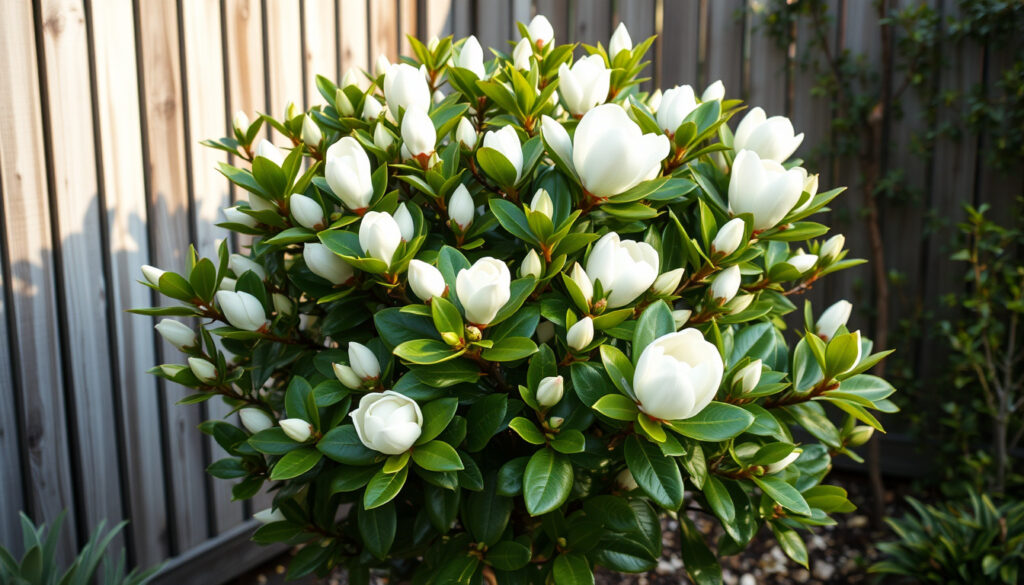
Teddy Bear Magnolia – Compact Evergreen for Small Spaces
Teddy Bear Magnolia: The Compact Evergreen for Small Spaces
Gardeners seeking the beauty of a Southern magnolia without the towering size have increasingly turned to compact cultivars that deliver ornamental impact in confined areas. The Teddy Bear magnolia stands out among dwarf options, offering glossy evergreen foliage, fragrant blooms, and a stature that fits comfortably in residential landscapes.
This cultivar has gained recognition for combining the classic appeal of Magnolia grandiflora with proportions suitable for modern smaller gardens, patio containers, and mixed borders. Its distinctive velvety leaf undersides give the plant its common name, creating visual interest even when not in bloom.
What Is Teddy Bear Magnolia?
The Teddy Bear magnolia, scientifically classified as Magnolia grandiflora ‘Teddy Bear’ (also marketed under the name ‘Southern Charm’), represents a dwarf selection of the Southern magnolia developed for residential use. Unlike its towering relatives that can reach 80 feet or more, this cultivar maintains a compact, manageable form ideal for smaller landscapes.
While sometimes called ‘Southern Charm,’ the name ‘Teddy Bear’ has become the dominant commercial designation for this particular dwarf magnolia selection. Both names refer to the same plant material available from nurseries.
12-15 ft mature
8-10 ft spread
Creamy white, 4-6 in
USDA 7-9
The plant features dense, attractive foliage with glossy green tops and characteristic velvety brown undersides that inspired its common name. Large, creamy-white fragrant flowers appear in late spring to early summer, with sporadic reblooming possible during the growing season. The upright, pyramidal to rounded growth habit creates a naturally symmetrical silhouette without extensive pruning.
Key Characteristics
- Dense evergreen foliage provides year-round visual interest
- Large, fragrant white blooms typically appear spring through summer
- Upright, pyramidal to rounded form with dense branching
- Hardy to approximately 5°F (-15°C)
- Low-maintenance once established in appropriate conditions
- Long-lived specimen with decades of ornamental value possible
| Attribute | Details |
|---|---|
| Botanical Name | Magnolia grandiflora ‘Teddy Bear’ |
| Type | Dwarf evergreen tree/shrub |
| Mature Size | 12-15 ft H x 8-10 ft W |
| Bloom Time | Late spring through summer |
| Hardiness | USDA Zones 7-9 |
| Flower Color | Creamy white, 4-6 inches |
| Foliage | Evergreen, glossy green with brown undersides |
How Big Does Teddy Bear Magnolia Get?
Understanding mature dimensions proves essential for proper placement in landscape designs. The Teddy Bear magnolia reaches a mature height of 15-20 feet with a width of 8-12 feet, representing a dramatic reduction in size compared to standard Southern magnolia varieties that can tower 80 feet with 40-foot spreads.
Growth rate falls into the slow category, with the plant adding only a few inches annually under normal conditions. This measured growth rate contributes to the cultivar’s suitability for permanent plantings near structures, walkways, or utility lines where larger trees would eventually cause problems.
Growth Timeline Expectations
- Year 1: Establishment phase with 3-5 feet height typical; focus on root development over top growth
- Year 3: First blooms often appear; plant assumes more defined form
- Years 5-10: Full compact form develops; regular flowering established
- Ongoing: Slow, steady growth continues; plant reaches mature dimensions over decades
The compact habit means this cultivar does not require extensive pruning to maintain its proportions. Left to grow naturally, it develops an attractive pyramidal to rounded shape appropriate for specimen planting, mixed borders, or screening applications in smaller gardens.
Comparing to Other Magnolias
When selecting a magnolia for limited spaces, understanding how the Teddy Bear cultivar compares to alternatives helps inform purchasing decisions.
Against standard Southern magnolia varieties, the Teddy Bear offers equivalent ornamental qualities—evergreen foliage, fragrant flowers, attractive form—in a fraction of the space. A standard Magnolia grandiflora may overwhelm a residential lot, while the dwarf selection integrates harmoniously without eventual removal requirements.
Compared to other dwarf magnolia cultivars such as ‘Little Gem,’ the Teddy Bear maintains similar dimensions and growth habits but distinguishes itself through the characteristic fuzzy brown leaf undersides that create a unique textural element in the landscape.
Allow 10-15 feet between specimens when planting multiple Teddy Bear magnolias to accommodate mature width without crowding. This spacing ensures adequate air circulation and room for symmetrical development.
How Do You Care for Teddy Bear Magnolia?
Successful cultivation of the Teddy Bear magnolia depends on meeting its basic cultural requirements. Once established in appropriate conditions, this cultivar proves relatively low-maintenance, requiring only routine attention to watering, feeding, and occasional pruning.
Selecting the Planting Location
Site selection significantly influences long-term performance. The ideal location offers full sun to partial shade with at least six hours of direct sunlight daily. Protection from harsh winds and hot afternoon sun helps preserve the showy flowers and prevents stress to the root system.
Soil conditions matter considerably for this cultivar. Well-draining soil with a slightly acidic to neutral pH range of 5.0-6.5 supports healthy growth. Before planting, testing soil pH and amending with compost, peat moss, or well-rotted manure helps create optimal conditions, particularly in regions with alkaline soils.
Avoid planting beneath the canopy of this tree, as the shallow root system resents disturbance once established. Select locations where soil cultivation around the base will not be necessary.
Planting Procedure
Fall or early spring planting allows root establishment before summer heat or winter cold stress. The planting hole should measure approximately 1.5 times wider than the root ball while maintaining the same depth—keeping the root crown at ground level prevents both settling and burial issues.
After positioning the plant and spreading roots over a mounded soil center, backfill the hole with native soil, gently tamping to eliminate air pockets. A deep watering immediately after planting settles the root zone, followed by constructing a 3-6 inch soil berm around the perimeter to direct water toward the root system.
Apply 3-6 inches of organic mulch such as pine needles or shredded leaves over the root zone to retain moisture and protect shallow roots. Avoid mushroom compost, which may contain excessive nitrogen for this species.
Watering Requirements
Consistent moisture proves critical during establishment and hot, dry periods. Deep watering once or twice weekly during summer months supports healthy growth, while reducing frequency to approximately every two weeks during winter maintains adequate hydration without promoting root rot.
The shallow root system makes these plants sensitive to both drought stress and overwatering. Standing water or chronically soggy conditions invite root rot, while extended drought causes leaf scorch and reduced flowering. Monitor soil moisture and adjust watering frequency based on rainfall, temperature, and soil drainage characteristics.
Fertilizing Schedule
Apply a balanced, slow-release fertilizer formulated for acid-loving plants (similar to products used for azaleas or camellias) in early spring. A second application in early autumn supports continued vigor in regions with longer growing seasons. Avoid excessive nitrogen, which promotes soft growth susceptible to winter damage and may cause fertilizer burn.
Pruning Techniques
Pruning needs remain minimal for this naturally compact cultivar. When necessary, conduct pruning during late winter or early spring while the plant remains dormant, or immediately after the main flowering period concludes. Remove dead or diseased branches at any time, thin crowded interior branches to improve air circulation, and tip-prune selectively to encourage denser growth.
Make clean cuts just above the branch collar without leaving stubs. The Teddy Bear magnolia responds well to light shaping but does not require extensive pruning to maintain its attractive form.
Where Can I Buy Teddy Bear Magnolia?
Availability varies by region, with specialty nurseries and online plant retailers offering the broadest selections. Local garden centers in USDA Zones 7-9 typically stock this cultivar during spring planting season, though availability may be limited compared to more common ornamental plants.
Specialty nurseries focusing on magnolias or unusual cultivars often provide superior plant quality and expert guidance on selection and care. Online nurseries ship container-grown specimens across broader geographic ranges, though shipping costs and seasonal limitations apply.
USDA Zone Suitability
The Teddy Bear magnolia thrives in USDA Hardiness Zones 7-9, tolerating winter temperatures to approximately 5°F (-15°C). This range encompasses much of the southeastern United States, the Pacific Northwest, and protected areas along the Atlantic coast.
Gardeners in Zone 7 can expect successful cultivation with appropriate siting to minimize winter exposure. Zone 8 and 9 gardeners enjoy optimal conditions for this cultivar, where established plants demonstrate vigorous growth and reliable flowering.
Regions outside these zones—particularly areas with severe winters or excessive summer heat—may struggle to maintain healthy specimens. Container cultivation allows for some flexibility, moving plants to protected locations during extreme weather.
Deer Resistance and Pest Concerns
Research specific to the Teddy Bear magnolia’s deer resistance remains limited. While the dense, leathery foliage may deter browsing to some degree, local deer populations vary in their feeding preferences. Gardeners in deer-prone areas should consider protective measures for young plants.
General magnolia pest and disease concerns apply to this cultivar, though dwarf varieties often demonstrate fewer problems than their larger relatives. Potential issues include scale insects, leaf spot diseases, and root rot in poorly-drained soils. Proper cultural practices—adequate spacing, appropriate watering, good drainage—minimize most disease pressures.
Regional extension services can provide localized guidance on specific pest and disease pressures affecting magnolias in particular areas.
Understanding What We Know and What Remains Uncertain
Clear communication about the reliability of available information helps gardeners set appropriate expectations for their plantings.
- Dwarf evergreen habit confirmed by multiple nurseries and horticultural sources
- Mature dimensions of 12-20 feet height and 8-12 feet width consistently reported
- USDA Zone 7-9 hardiness supported by multiple sources
- Fragrant, creamy-white flowers in spring-summer confirmed
- Acid soil preference (pH 5.0-6.5) well-documented
- Slow growth rate of several inches annually established
- Bloom abundance depends significantly on local climate, sun exposure, and care
- Regional performance varies within USDA zones based on microclimate and soil conditions
- Precise deer resistance in different locations remains unverified through controlled studies
- Pest and disease susceptibility varies by region; limited specific data for this cultivar
Landscaping Applications and Historical Context
The Teddy Bear magnolia emerged as part of broader horticultural trends toward compact ornamental plants suitable for changing residential landscapes. As property sizes have decreased and container gardening has grown in popularity, dwarf magnolia cultivars have filled gaps previously occupied by sprawling Southern magnolias unsuitable for modern applications.
The cultivar offers versatility in landscape use, functioning effectively as a specimen planting, accent plant near entryways or patios, privacy screen when planted in groupings, or container specimen for regions with borderline cold hardiness. The year-round evergreen foliage provides consistent structure and color, while seasonal flowers offer aromatic interest during bloom periods.
Comparisons to standard Southern magnolia varieties reveal the Teddy Bear’s primary advantage: equivalent ornamental qualities in a fraction of the space. For gardeners who admire Southern magnolias but lack room for 80-foot specimens, this dwarf cultivar delivers the characteristic glossy leaves, fragrant blooms, and elegant form in a garden-appropriate package.
Monrovia Nursery describes the Teddy Bear magnolia as ideal for containers or small garden spaces where larger magnolia varieties would overwhelm the landscape.
The USDA Plants Database classifies this cultivar among evergreen broadleaf ornamentals suitable for residential cultivation in appropriate hardiness zones.
Next Steps for Prospective Growers
For gardeners ready to add this compact evergreen to their landscapes, several practical steps help ensure success. Begin by evaluating planting sites for adequate sunlight, wind protection, and well-draining soil conditions. Test soil pH and prepare amendments if necessary before bringing plants home.
Select healthy specimens from reputable sources, checking for vibrant foliage, sturdy stems, and roots that show no signs of circling or binding. Plant according to proper procedures in fall or early spring, water consistently during establishment, and apply mulch to protect the shallow root system.
With appropriate care, the Teddy Bear magnolia rewards gardeners with decades of ornamental value—fragrant spring blooms, year-round evergreen foliage, and a compact habit that fits comfortably in gardens of any size.
For those planning hedges or screening plantings, pairing magnolia care with regular maintenance tools like a Makita Hedge Trimmer helps maintain neat appearances while preserving plant health.
Frequently Asked Questions
Does teddy bear magnolia produce flowers?
Yes, the Teddy Bear magnolia produces large, fragrant creamy-white flowers typically 4-6 inches in diameter. Blooms appear primarily in late spring through summer, with sporadic reblooming possible during the growing season.
What USDA zones is teddy bear magnolia suitable for?
This cultivar thrives in USDA Hardiness Zones 7-9, tolerating temperatures to approximately 5°F (-15°C). Zone 8 and 9 offer optimal growing conditions.
Is teddy bear magnolia evergreen?
Yes, the Teddy Bear magnolia retains its glossy green foliage year-round. The leaves feature distinctive velvety brown undersides that remain visible and add winter interest.
How fast does teddy bear magnolia grow?
Growth rate is slow, with the plant adding only several inches annually. Full mature size is reached over many years, with the compact habit maintained naturally without extensive pruning.
Is teddy bear magnolia deer resistant?
Specific deer resistance data for this cultivar remains limited. The dense, leathery foliage may deter browsing to some degree, though local conditions vary. Protective measures may be advisable in areas with high deer pressure.
What soil pH does teddy bear magnolia prefer?
Well-draining soil with a slightly acidic to neutral pH range of 5.0-6.5 supports optimal growth. Amending alkaline soils with compost, peat moss, or other organic materials helps create suitable conditions.
How far apart should teddy bear magnolias be planted?
Space plants 10-15 feet apart to accommodate mature width while ensuring adequate air circulation and room for symmetrical development.
More related posts
 Colonel Sanders: KFC Founder, Real Name, Age, and Death
 Chris Stapleton: Facts, Rumors & 2026 Tour Plans
 AUD to USD Exchange Rate: Current Value, Forecast & Tips
 Liverpool vs Bournemouth: 9-0 Win, H2H Stats & How to Watch
 Ritz Cinema Randwick Guide: Showtimes, History & Tickets
 Thelma Riley: Who Was Ozzy’s First Wife and Where Is She
 Janelle Monáe: Pansexual Singer, Actress, and Activist
 Harvey Norman Wiley Park – Address, Hours and Contact Guide
